The 5 Chairs: How Self-Aware Leaders Boost Visibility Through Behaviour
By Mark Sephton.
In the world of leadership, the way we behave in the face of challenge, conflict, and opportunity determines more than just our outcomes; it shapes how we’re perceived, heard, and remembered.
Visibility isn’t just about standing in the spotlight; it’s about how we show up in that light. It’s the energy we carry into a room, the integrity of our responses, and the alignment between our intention and our impact. Few frameworks embody this alignment more powerfully than The 5 Chairs, created by behavioural coach and leadership expert Louise Evans. While I help leaders amplify their voice and presence, Louise helps them master their behaviour, and in that synergy lies a deeper truth: before you can be seen for your greatness, you must be aware of your patterns.
True visibility is born from behavioural choice, emotional intelligence, and self-leadership. I invited Louise into this conversation to explore how mastering your behaviour shapes not only your leadership, but the way the world experiences you.
Louise, your work helps people become more conscious of their behavioural choices through The 5 Chairs. How do these behavioural patterns impact the way someone is perceived or not perceived in a leadership context?
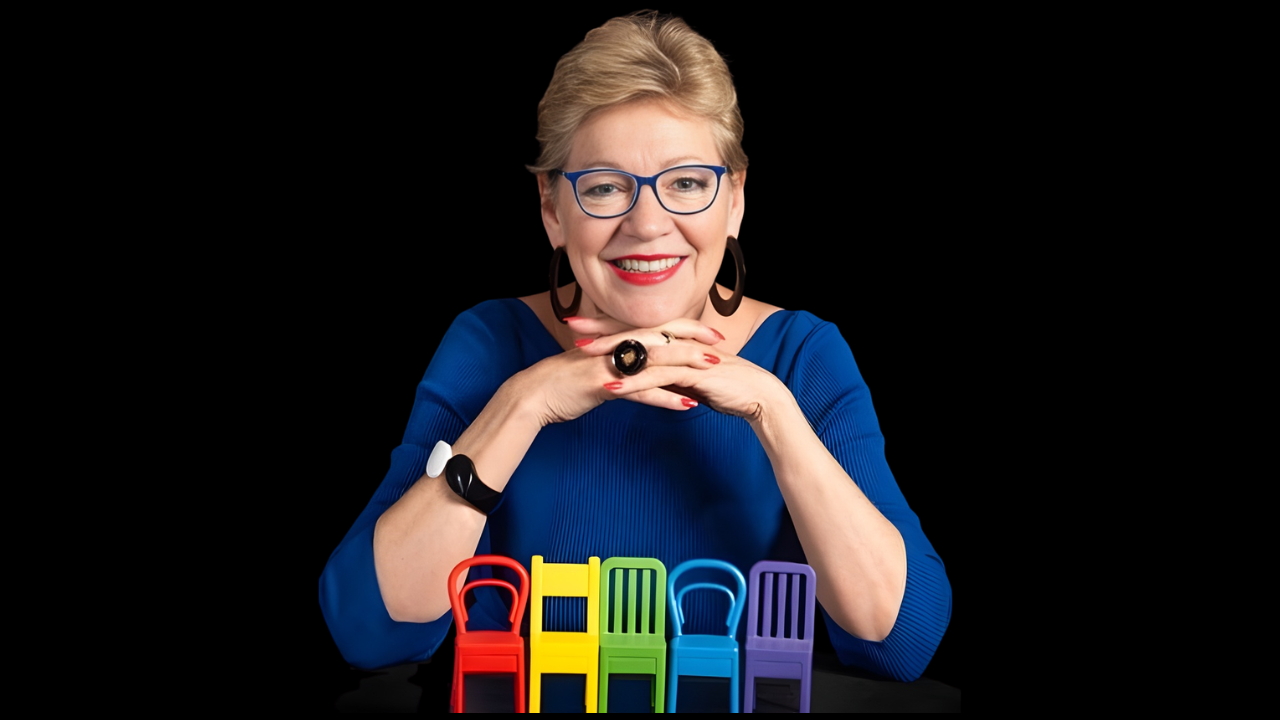
They impact everything. The way we behave sends out a signal before we even speak. If someone’s constantly in the Red Chair judging, blaming, reacting, that energy gets picked up fast. People start to tune them out or feel guarded toward them. But when someone’s operating from the Green Chair by being curious, empathetic and open, you feel that too. It creates space for connection. Leaders aren’t just followed because of what they say. They’re followed because of how they show up and how they make you feel. In the end, it’s our behaviour that writes the story people tell about us, and that story either builds our influence or quietly erodes it.
In your experience, how often do visibility issues stem not from confidence or clarity, but from unconscious behaviours that sabotage how someone is received?
Very often. I’d say more than people realise. A lot of people think they’re being clear or confident, but if they’re unknowingly sitting in the Yellow Chair, i.e. they’re fearful, hesitant and withdrawn, then people won’t see them. Not because they don’t have something to offer, but because their behaviour sends mixed signals. It’s not about shouting louder; it’s about shifting those internal patterns that block visibility. The real power lies in learning to align how you feel on the inside with what you project on the outside, so people can actually receive the depth of what you bring.
You speak about the power of pause, the space between stimulus and response. How can mastering that pause enhance a leader’s presence and authority, especially in high-stakes situations?
The pause is everything. For me, this is where self-leadership begins. When you pause, even for a second, you can take back control. You’re no longer reacting; you’re choosing your response. In high-stakes situations, that calm, grounded energy creates trust. People see you thinking. They feel that you're not just reacting emotionally, but responding intentionally. That’s authority without force. And over time, that quality of presence becomes your signature as a leader; people start to count on it and look for it in you.
Many people seek visibility but operate from The Red Chair — reactive, defensive, or fearful. What shifts are necessary for someone to move toward The Green Chair and lead from a place that invites trust and attention?
The first shift is awareness. You can’t leave the Red Chair if you don’t know you’re in it. Once you become aware of your behaviour, you can question it. Why am I reacting this way? What’s actually going on underneath? Then it becomes about choice. The Green Chair isn’t about being perfect; it’s about being present, curious, and responsible for your impact. That shift alone changes the room. It changes how people experience you, and often it invites them to soften their own behaviour in response.
How does behavioural self-awareness influence the kind of visibility that leaves a lasting impact—not just attention, but real resonance?
Ultimately, it’s not about performing; it’s about alignment. When your behaviour matches your intention, people feel that. They trust it. You’re not just grabbing attention, you’re actually earning it. Resonance comes from being real, grounded, and intentional. And self-awareness is the bridge that gets you there. Without it, visibility can be fleeting, but with it, your impact has the power to stay with people long after you’ve left the room.
What advice would you give to leaders who want to be seen more clearly—not just for their role or achievements, but for their values and humanity?
My advice would be: ‘Drop the mask.’ People connect with what’s human, not what’s polished. Speak from your values. Share what matters to you. And most importantly, live it. Behaviour is louder than words. If you want to be seen clearly, show up consistently, not just when it’s easy, but when it’s hard. That’s what people remember. It’s that congruence between what you say and what you embody that makes your visibility authentic and lasting.
In your journey creating The 5 Chairs, when did you first become aware of your own behavioural visibility - the moment you realised how you were showing up was affecting how others experienced you?
I remember a moment in a team session some years ago when I was leading a group and thought I was being direct and helpful. But someone gave me feedback that I was actually coming across as controlling. That hit me hard. It made me realise that intention isn’t enough. What matters is how you land. That was the start of a deep dive into my own behavioural impact, particularly my personal relationship with the concept of control. This had played a significant role in my relationship with my mother and prompted me to do some very deep inner work and disentanglement. That feedback was uncomfortable, but it gave me the gift of awareness, which ultimately shaped the 5 Chairs work.
You’ve worked with global leaders across cultures. Are there universal behaviours that elevate visibility across the board, regardless of industry or personality? What behaviours consistently draw people in?
Yes, absolutely. Curiosity, presence, and empathy. I have found that it doesn’t really matter where you are in the world,but when someone is really listening, when they’re grounded and respectful, people lean in. It’s not about charisma, it’s about connection. Those are the leaders people remember. And those, for me, are the behaviours that transcend personality. They’re universal signals of safety and respect, and no matter what culture or industry you’re in, people are naturally drawn to them.
Mark Sephton has helped numerous high-level thought leaders and creatives unveil their story, voice, and visibility so they, too, can make their mark on the world. He creates a safe space for aspiring thought leaders to feel heard, find confidence, and ignite their impact. He does this by increasing their visibility and rapport through storytelling, interviews, content creation, and media presence. In fact, he has conducted over 5,000 life-changing interviews with thought leaders and creatives, and is often referred to as the ‘King of Conversation’.
Mark has shared his life experiences as an author of three books on the subject of personal development: Inside Job, Plot Twist & Mark of a Man. He’s recognized for his contribution as an inspiring storyteller who provides positive exposure and opportunities for others who have a great purpose and passion to make their mark in their own distinctive way.
Find out more about Mark and his work at marksephton.com
Want more like this?
Join The Biz Love Letter for practical business insight, founder stories and visibility opportunities every Monday — plus every new issue of The Female CEO Magazine delivered free to your inbox.
Useful stuff only. No spam, ever.