Summer of Healing: Why Play is Essential Nourishment for Your Inner Child
By Marisa Sim.
Do you remember the feeling of warm grass beneath your bare feet? The taste of ice cream melting faster than you could lick it? The pure joy of running through a sprinkler on a hot afternoon?
For many of us, these memories feel like they belong to another lifetime. Somewhere between childhood and motherhood, we learned to be serious. We knew that play was frivolous, that rest was lazy, that joy needed to be earned. We became experts at doing, producing, and performing, but forgot entirely how to be simple.
This summer, I’m inviting you to remember.
The Inner Child’s Hunger for Play
When we talk about the inner child, we’re talking about the part of us that still carries our earliest experiences, wounds, and unmet needs. For many women, especially those of us healing from childhood trauma, our inner child was denied something fundamental: the freedom to play.
Maybe you grew up in a household where play felt unsafe, where you had to be hypervigilant, where spontaneity was punished, where being “good” meant being quiet and still. Maybe you were parentified early, taking on adult responsibilities before you were ready. Maybe joy itself felt dangerous, something that could be taken away at any moment.
These experiences don’t just disappear when we grow up. They live in our bodies as tension, as an inability to relax, as a persistent feeling that we don’t deserve pleasure. They show up in our perfectionism, our overworking, our guilt around rest. They manifest as a deep discomfort with unstructured time, with silliness, with doing things “just because.”
Your inner child is still there, waiting. And she’s hungry for what was denied: the nourishment of play.
Why Play Isn’t Frivolous—It’s Healing
Let me be clear: play is not a luxury. It’s not something you get to do after you’ve earned it by being productive enough. Play is a fundamental human need, and for those of us with wounded inner children, it’s medicine.
When we play, something amazing happens in our brains and bodies. The prefrontal cortex, the part responsible for planning, worrying, and controlling, takes a break; meanwhile, areas associated with joy, creativity, and present-moment awareness light up. Our nervous system downregulates from a state of fight-or-flight to one of safety and connection.
Play gets us out of our heads and into our bodies. It allows emotions to move through us rather than getting stuck. It creates the conditions for our inner child to feel safe enough to emerge, to express, to release what’s been held finally.
But here’s what’s important to understand: there’s a difference between doing activities with your children and actually accessing your own playful state. You can spend all summer at the park, the pool, the beach, and still not be playing. If you’re monitoring, managing, performing the role of “fun mom” while staying locked in your head, your inner child isn’t being fed.
Real play requires letting go. It requires being willing to look silly, not having a goal, and being fully present in your body without needing to control the outcome.
What Play Actually Looks Like for Your Inner Child
So, what does it mean to play as an adult woman, truly healing her inner child? It’s probably different from what you think.
Unstructured time. Your inner child needs permission to wander without purpose. To lie in the grass and watch clouds. To pick flowers you don’t need. To follow curiosity without it leading anywhere productive. In our results-driven world, this feels almost rebellious. That’s how you know it’s working.
Sensory experiences. Play is deeply somatic. It’s about feeling, not thinking. Swimming and noticing how the water holds you. I love floating in a pool and feel the warmth of the sun beating down on me. Running your hands through sand or soil. Tasting food slowly and with attention. Listening to music and just boogie in the kitchen, not as background noise while you work.
Creative expression without outcome. This is crucial. Your inner child doesn’t want to make something Instagram-worthy. She wants to paint and not care if it’s “good.” She wants to dance in the kitchen like no one’s watching (even if someone is). She wants to sing at the top of her lungs in the car. She wants to make mud pies, build sandcastles, and create chalk art on the driveway that will wash away.
Silliness and laughter. When was the last time you were truly, ridiculously silly? When did you last laugh until your stomach hurt? Your inner child needs permission to be absurd, to make jokes that aren’t funny, to pull faces, to engage in the kind of nonsense that has no purpose other than joy.
Movement for joy, not fitness. Forget your step count. Forget burning calories. Can you swing on a swing? Do a cartwheel (or try and fail)? Skip instead of walking? Jump in puddles? Climb a tree? Move your body for the simple pleasure of feeling it move? Even at my age, I enjoy swings!
Nostalgia activities. What did you love as a child that you’ve abandoned? Maybe it’s making popsicles, reading in a hammock? Perhaps it’s making daisy chains. Maybe it’s catching fireflies. Maybe it’s something you weren’t allowed to do but desperately wanted to. Your inner child remembers. She’s been waiting for you to come back for her.
Summer’s Unique Invitation
There’s something about summer that naturally invites us to soften. The longer days permit us to stay up longer. The warmth invites us to slow down, to wear less, to feel more. The natural world is abundant and alive, modelling exactly the kind of effortless being we’ve forgotten.
Summer also carries collective permission. Society expects us to be a little less rigid in summer, to take vacations, to enjoy ourselves. Even if you can’t take time off work, even if your schedule doesn’t fundamentally change, there’s still an energetic shift available to you.
But here’s what will happen when you try to access it: resistance.
I’ll be honest, guilt will rise. “I don’t have time for this. I should be doing something useful.” Self-consciousness will appear. “I look ridiculous. What will people think?” Fear might emerge. “If I let go, something bad will happen. I need to stay in control.”
These are the voices of your protective parts, trying to keep you safe in the only way they know how. Thank them for their concern, and play anyway. The only way to get over resistance is through it.
Practical Integration for Busy Mothers
I know what you’re thinking: “This sounds beautiful, but I have three kids, a business to run, and about fifteen minutes of free time per week.”
I hear you. And here’s the truth: your inner child doesn’t need hours. She needs presence. She needs you to show up, even in small ways.
Micro-moments of play throughout the day. While you’re making breakfast, can you play music and dance to it? While your coffee brews, can you step outside and feel the sun on your face? Can you allow yourself to actually enjoy the water splashing while you wash dishes, instead of rushing through the task?
Playing with your children from a different place. Instead of managing their play, join it. Get in the sand. Jump in the pool. Roll down the hill. Let them see you being silly, making mistakes, having fun without needing to look good or do it right.
Solo play practices. This matters. Your inner child also needs time away from your actual children. Even fifteen minutes of solo play, doodling, dancing, or lying in the grass can be profoundly healing. It tells your inner child: “You matter. Your joy matters. Not just as a mother, but as yourself.”
Creating a play permission slip. Literally write yourself one. “I, [your name], give myself full permission to play without guilt, to be silly without judgment, to prioritise joy without earning it first.” Put it where you’ll see it.
Journaling prompts for deeper exploration:
- What did I love to do as a child that I’ve completely abandoned?
- When was the last time I felt truly playful? What was I doing?
- What beliefs do I hold about play? (It’s wasteful, it’s childish, it’s selfish, etc.)
- What would my inner child want to do this summer if she knew she was safe and allowed to do so?
- What happens in my body when I think about playing? Where do I feel resistance?
The Ripple Effect: Healing That Extends Beyond You
Here’s something beautiful that happens when you begin to play: you don’t just heal yourself. You heal your children, too.
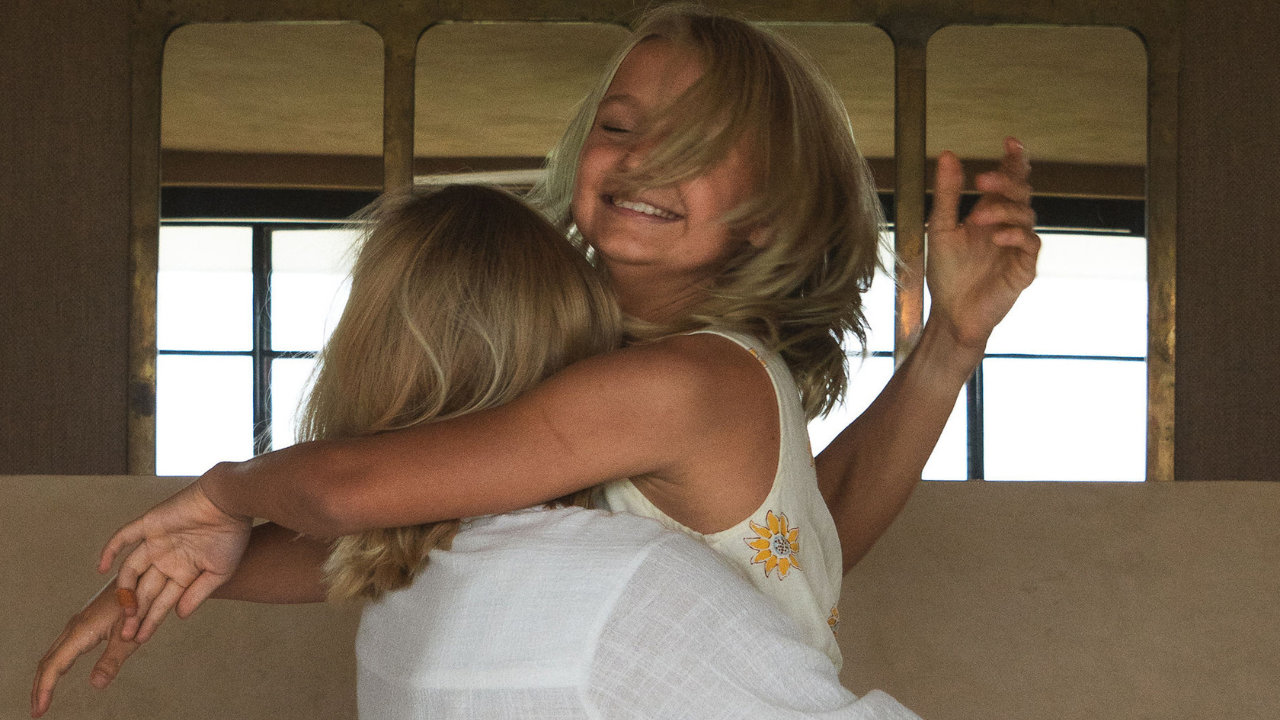
When your children see you genuinely joyful, unguarded, and playful, you give them something priceless. You show them that it’s safe to be fully alive. You model that productivity isn’t the only measure of worth. You demonstrate that rest, pleasure, and joy are not things to feel guilty about—they’re essential parts of being human.
You break generational patterns without even trying. Your grandmother may have been too preoccupied to play. Your mother may have been too wounded. But you? You get to be the one who remembers. You get to be the one who says, “This ends with me. My children will know a mother who has fun and laughs.”
Every time you choose play, you’re creating new neural pathways in your brain. You’re quite literally rewiring your nervous system. You’re building evidence that joy is safe, that letting go doesn’t lead to disaster, that you are allowed to take up space with your aliveness.
You’re rewriting your story.
An Invitation
This summer, I invite you to do something radical: prioritise your own play.
Not as a treat after you’ve done everything else. Not as something you’ll get to “someday when things slow down.” Now. This week. Today.
Choose one small act of play. Just one. Lie in the grass and watch clouds move across the sky. Wade into a stream and feel the water rush around your ankles. Buy yourself an ice cream cone and eat it slowly, messily, joyfully. Swing on a swing. Sing in the car—dance in the rain.
Notice what comes up. Notice the resistance, the guilt, the self-consciousness. And do it anyway.
Your inner child has been waiting so patiently. She’s been waiting for you to remember that you’re not just a mother, a business owner, a caretaker, a responsible adult. You’re also still that little girl who knew how to play, who could lose herself in the moment, who understood that joy was its own justification.
She’s still there. And this summer, she’s inviting you to come out and play.
Marisa Sim is a trauma-informed coach. As a childhood trauma survivor, she understands firsthand how trauma affects our mental health and well-being. Now she supports women to heal from their childhood trauma and step into their power.
You can find out more about Marisa and her work at: https://www.marisasim.com/
Want more like this?
Join The Biz Love Letter for practical business insight, founder stories and visibility opportunities every Monday — plus every new issue of The Female CEO Magazine delivered free to your inbox.
Useful stuff only. No spam, ever.