Don't Try To Be Everywhere. Be Worth Finding.
Being seen and being chosen are two very different things. Here’s how to build authority in business by closing the gap between what you know and what a stranger can find, without trying to be everywhere.
Someone may recommend you tonight.
It could happen over dinner, in a group chat or at the school gate. Someone mentions a problem, and a friend who knows your work says, “Oh, you should talk to her.”
You’ll probably never know that conversation happened.
But what happens next matters enormously.
That person picks up her phone and searches for you. She might visit your website, scroll through your social media, read a review or look at something you’ve written. Within minutes, she’s beginning to form an opinion about you and your business.
And you’re not there to explain yourself.
Everything you’ve put into the world has to do that for you.
Now, I run a media platform. Visibility is quite literally part of what I do, so you might expect me to tell you to get yourself everywhere, shout a little louder and post until your fingers drop off.
I’m not going to do that. Because after years of working with women in business, interviewing founders and sharing their stories, I’ve come to believe something that deserves far more attention.
Being seen and being chosen are two very different things.
Being Seen Is Only The Beginning
We talk about visibility in business as though it’s the ultimate prize.
More followers. More views. More people recognising your name. More opportunities to put yourself in front of an audience. And don’t misunderstand me, visibility is important. People cannot choose a business they don’t know exists.
But being visible doesn’t automatically mean being understood, trusted or remembered.
You could have thousands of followers and still struggle to turn that attention into enquiries. Equally, you could have a relatively small audience and a reputation that brings the right opportunities directly to your door.
The difference is what people find when they start looking more closely.
Can they understand what you do? Is there evidence that you’re good at it? Can they see who you’ve helped, what you’ve achieved or what you know? And, perhaps most importantly, can they explain why someone else should choose you?
Because having a lot of people looking at you isn’t the same as giving them a reason to work with you.
The Authority Gap
There’s something I see regularly when working with founders.
Women with years of experience, exceptional knowledge and businesses they’ve poured huge effort into building, who still struggle to explain what makes them worth choosing.
Sometimes they’re so close to their own work that they assume everybody already understands its value. Other times, they’ve become so accustomed to doing what they do that they no longer recognise how much expertise they’ve accumulated.
And sometimes they’re so busy doing the work that they haven’t stopped to show anyone what they’re capable of.
This is what I call the authority gap.
It’s the space between what you know about your own capabilities and what someone who has never met you can actually verify.
You know how much work has gone into building your business. Your existing customers might know how brilliant you are. But someone discovering you for the first time has none of that history. They can only judge what you’ve made available to them.
Think about that.
You could have a decade of experience, hundreds of happy customers and a reputation built on doing excellent work, but if none of that is visible to the person researching your business, how would they know?
Your expertise exists. The evidence hasn’t caught up with it yet.
And that’s an important distinction. When it comes to how to build authority in business, the answer isn’t necessarily to learn more, achieve more or become someone more impressive. It might simply be time to show people what you’ve already done.
Your Reputation Arrives Before You Do
Let’s go back to that recommendation.
Someone has mentioned your name, and a potential customer is looking you up. What will she find?
Perhaps she’ll discover a clear, current website that tells her exactly what you do and who you help. There might be genuine reviews, examples of your work or an interview where you’ve shared your expertise.
Or she might find a social media profile you haven’t updated for months, a website promoting services you no longer offer and a biography that doesn’t begin to reflect the business you’ve built.
Neither necessarily tells the complete story of who you are. But both create an impression.
Your online presence is a shop window on a street you never get to walk down. People are pressing their noses to the glass while you’re asleep. It’s your job to make sure the lights are on.
This doesn’t mean you need an all-singing, all-dancing website, a massive marketing budget or a perfectly curated digital existence. It means making the information that matters easy to find, because that’s where business credibility is built.
What do you do? Who do you help? Why should someone trust you? And how can they take the next step?
Those are the questions your potential customers are trying to answer, whether you realise it or not.
Stop Waiting Until You’re Impressive Enough
One of the things I love most about running The Female CEO® is getting to hear the stories behind the businesses.
Not only what someone sells or how successful they’ve become, but how they got there. The unexpected turns, the difficult decisions, the mistakes, the lessons and the moments that changed the course of everything. And something that still surprises me is how often women underestimate the value of those experiences.
I’ve heard variations of the same question countless times.
“Why would anybody want to know about my little business?”
My answer is usually that more people would be interested than you think. But I’d also encourage you to ask a different question. Instead of wondering whether you’re impressive enough to be featured, interviewed or invited to speak, ask yourself what you could contribute to the conversation.
What have you learnt that someone else might find useful?
What have you experienced that could change how another woman approaches a challenge?
What have you discovered about your industry that deserves to be discussed?
You don’t need to have built a multimillion-pound company to have something valuable to say. Some of the most interesting business stories aren’t about extraordinary success at all. They’re about ordinary people making difficult decisions, finding unexpected solutions and learning things that could save someone else a great deal of time, money or frustration.
That’s where good storytelling comes in.
A thoughtful interview, a useful article, a speaking opportunity or a well-produced feature can help people understand not only what you do, but how you think. And when that content is published somewhere credible and remains accessible, it can continue introducing you to people long after the original conversation has ended.
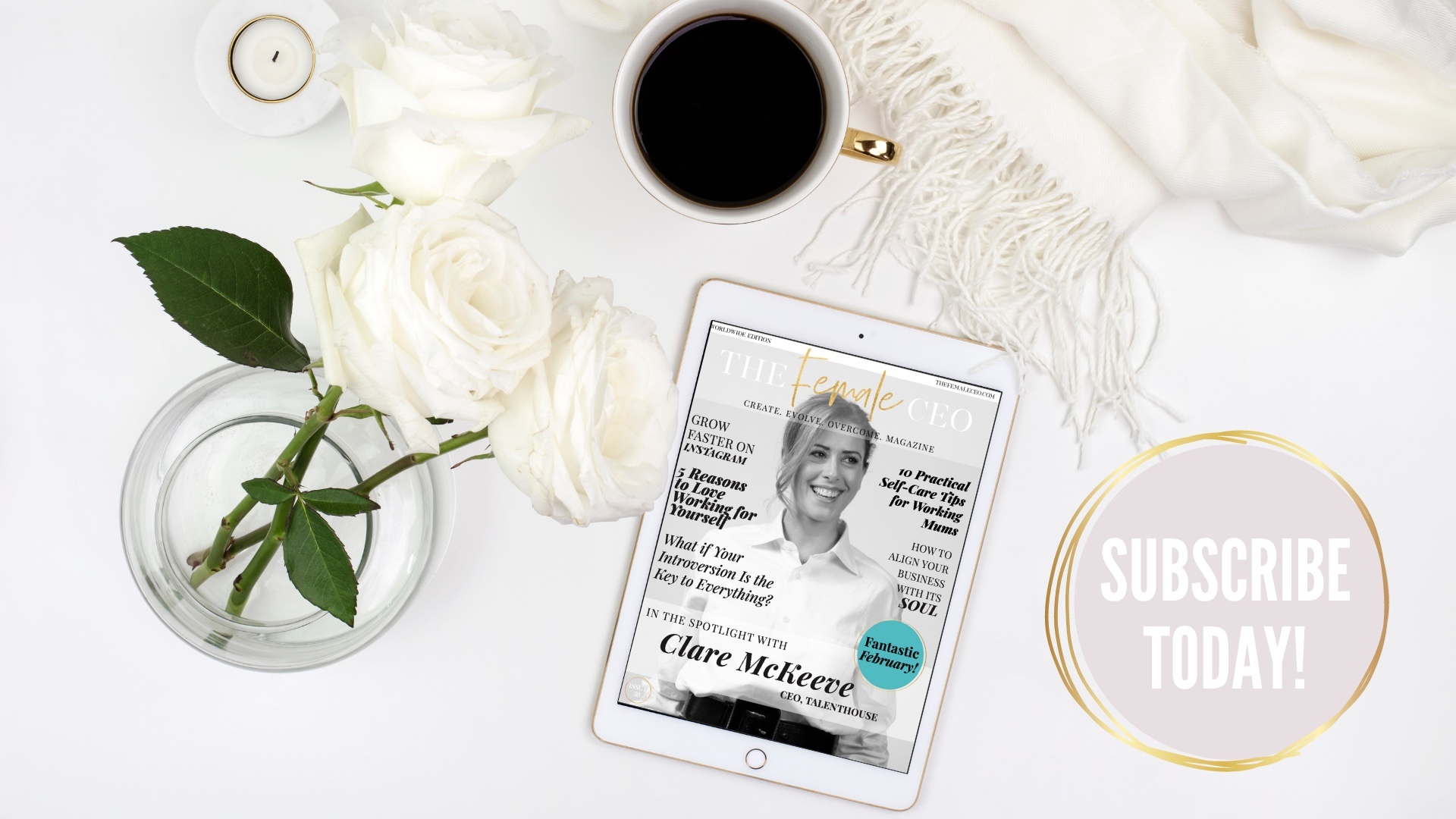
That’s one of the reasons I believe so strongly in the value of long-form editorial. Browse past issues of the magazine and you’ll see what I mean.
A social media post can be great for starting conversations. But a substantial article gives people somewhere to go when they want to learn more. Something to share with a prospective customer, include on their website or send to someone considering working with them.
Remember, investing in your visibility isn’t about buying credibility. It’s about giving the credibility you’ve already earned somewhere to be seen.
A brilliant feature can’t manufacture expertise that doesn’t exist, but it can help the right people recognise the experience, knowledge and perspective that does. Good publicity can bring someone to your door. Your work and reputation are what make them want to stay.
You Don’t Have To Be Everywhere
This is where we make business unnecessarily exhausting.
We convince ourselves that if there’s a platform, we should be on it. Instagram, Facebook, LinkedIn, TikTok, Pinterest, YouTube. A newsletter, a podcast, a blog. The list goes on (and on).
Before we know it, we’re spending more time trying to prove we’re running a business than actually running one. And the pressure to keep up can become ridiculous.
But visibility isn’t a competition to see who can occupy the most corners of the internet. It’s about being discoverable in the places that are important to the people you’re trying to reach.
For some businesses, that might mean a well-maintained website, strong Google reviews and a local business listing. For others, it could be LinkedIn, industry publications, professional networks or a newsletter that people genuinely want to read.
The important thing is that your presence is relevant, consistent and useful.
I’d much rather see a founder maintain two excellent places where potential customers can discover her work than watch her struggle to keep seven platforms barely alive because someone once told her she should.
You don’t need to be everywhere. You need to be effective where you are.
And once someone finds you, you need to give them a reason to remember you.
What Do You Want To Be Known For?
If there’s one practical thing I’d love you to take away from this, it’s the importance of looking at your business through someone else’s eyes. Not as the founder who knows every detail, but as a complete stranger encountering it for the first time.
I’d encourage you to ask yourself three questions.
- What do I want to be known for?
Not everything you’re capable of doing (the list would be endless). Not every service you’ve ever offered. What do you actually want people to associate with your name?
- What evidence could someone find today?
Think genuine customer reviews, examples of your work, useful articles, client experiences, relevant qualifications, media coverage or results you’re able to demonstrate. Is that information accessible, current and easy to understand?
- What’s one thing I can improve in the next 30 days?
It might be rewriting the introduction on your website so people understand your business in seconds. Perhaps it’s asking a few happy customers to share their experiences, updating a neglected Google Business Profile or finally writing that article you’ve been thinking about for months on end.
It doesn’t have to be complicated. And it certainly doesn’t need to become another big project on your already overflowing Trello board.
Choose one thing that would make it easier for someone to understand why they should work with you. And do that.
Be Worth Finding
Right now, somewhere, someone could be having a conversation about exactly the problem your business solves. They might not know your name yet. They might never have seen your social media or heard of your company.
But someone else might.
And if that person recommends you, what happens next is partly in your hands. You won’t be there when your name comes up. You won’t be there when they search for you afterwards.
You don’t need to be.
Your experience, your work, your reputation and the evidence you’ve made available can all help tell your story.
You don’t need everybody to know who you are. You need the right people to understand why you matter to them.
So don’t try to be everywhere. Be worth finding.
I believe in you (always).
Editor’s note: We’re now planning our 2027 features and magazine covers at The Female CEO®. If you have a story, experience or perspective that deserves to be shared, explore our In The Spotlight features and visibility opportunities. We’d love to hear from you.
Tricia Scott is the Founder and Editor-in-Chief of The Female CEO — a global platform, magazine, and community dedicated to helping women build confident, aligned, powerful businesses.
A startup mentor and multi-company director, she’s spent the past decade helping women move from overwhelmed and isolated to empowered and intentional.
Most days, she’s juggling her MacBook, her next big idea, and a very necessary caffeine supply. Connect with her at thefemaleceo.com.
Want more like this?
Join The Biz Love Letter for practical business insight, founder stories and visibility opportunities every Monday — plus every new issue of The Female CEO Magazine delivered free to your inbox.
Useful stuff only. No spam, ever.