Getting to the Roots of Grass & Co: Ben Grass on Building, Growing and Knowing When To Let Go
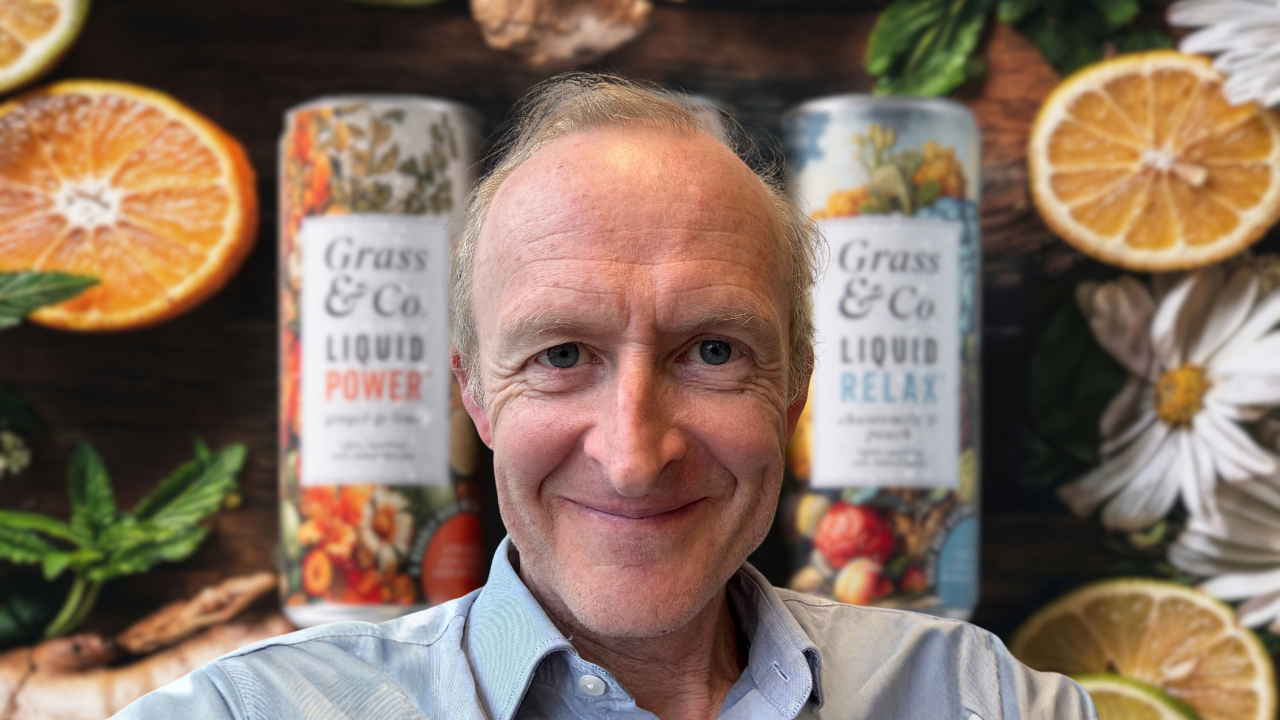
What begins with a damaged shoulder in Yosemite eventually leads to hundreds of Holland & Barrett stores, a mushroom farm in the mountains outside Shanghai, an upcoming Waitrose launch and a lesson in knowing when somebody else might be better equipped to lead the next chapter. Founder Ben Grass tells The Female CEO about the curiosity, commercial reality and constant evolution behind Grass & Co.
By Tricia Scott.
There are easier ways to come up with a business idea than falling while climbing in Yosemite and smashing up your shoulder. But then, the best origin stories rarely begin with someone sitting down and announcing that they are going to disrupt a sector.
For Ben Grass, the beginnings of Grass & Co were much less calculated.
After a few years in management consulting, most of Ben’s career had been spent in film and television as a producer, a job that regularly took him to California. The outdoor culture, the emphasis on health and the slightly different attitude towards wellbeing had begun to pique his interest, but it was a climbing accident that moved that curiosity somewhere more tangible.
Back in Los Angeles nursing his injured shoulder, friends suggested he try a CBD muscle balm.
Ben did. And noticed enough of a difference to become curious.
He brought several products home with him. His wife, Nikki, who had been struggling with sleep, tried one too. Meanwhile, Ben’s brother Tom, ahead of the curve, had already been looking into CBD and other natural products.
Three experiences. Three very different reasons for trying them. And, as Ben puts it, enough to think: there might be something in this.
Following the Thread
Grass & Co began taking shape in early 2019, at a time when CBD was still relatively unfamiliar territory for many UK consumers.
Ben and Tom started researching the category and thinking seriously about what a company might look like. From the beginning, Ben says, there were a few things they wanted to get right.
Quality was the obvious one.
Taste was another.
Because, somewhat inconveniently for an industry trying to persuade people to make something part of their daily routine, an awful lot of the products available at the time tasted, in Ben’s words, “a bit like eating soil”.
And then there was transparency.
Grass & Co introduced QR codes that allowed customers to see what was in individual batches of products, while the products themselves were named simply enough for somebody encountering the category for the first time to understand what they were looking at.
That simplicity became important because this was not only a new business. It was a business operating in a category most customers knew very little about, with strict regulations around what brands could and couldn’t claim.
Education had to become part of the sales strategy.
One wonderfully uncomplicated solution came from within the team: a wooden reference card that could sit beside the till in retail stores, giving staff clear information they could use when customers started asking questions. It wasn’t particularly glamorous. It was, however, smart.
Instead of expecting consumers to arrive fully educated about an emerging category, Grass & Co gave the people standing in front of those consumers the tools to talk about it.
And then they needed somewhere to sell it.
The Retail Breakthrough
There is an enormous gap between creating a product and persuading someone to buy it.
An online shop can technically mean your business is available to the entire world. It can also mean you have a very nice website sitting unnoticed in one tiny corner of the internet.
Grass & Co’s first retail listings came through independent health food stores, the kind of places where staff genuinely talk to customers and where that wooden card earned its keep.
Then, around 2021, came the listing that changed the shape of the business: Holland & Barrett. It gave the young brand something beyond sales: credibility.
Going from a few dozen stores to hundreds changes a business pretty quickly.
Suddenly, scale means buying larger volumes. Larger volumes change the economics. But larger distribution also brings a very different level of responsibility.
You need the stock.
You need it in the right place at the right time.
You need enough marketing behind the product for customers to actually pick it up.
And, crucially, getting onto a retailer’s shelves is only half the job. You then need to sell enough to stay there.
The team went all in.
They travelled around the country meeting store teams, attending conferences and learning how the retail operation worked from the inside.
In Grass & Co’s first year trading with Holland & Barrett, the business was named Supplier of the Year. That retail story is still moving. Next comes a launch into Waitrose — another significant step as the brand pushes further into the mainstream drinks market.
Ben is quick to attribute that success to the people around him, and it becomes a recurring theme in our conversation.
The founder may have the original idea, but the founder is not the business.
And growth makes that distinction increasingly important.
From CBD to Mushrooms
By this point, another thread had already caught Ben’s attention.
Mushrooms.
His initial curiosity came partly through reading around psychedelic medicine, including Michael Pollan’s How to Change Your Mind, which led him towards an entirely different area: functional mushrooms.
Lion’s Mane, Reishi, Cordyceps and others had long histories of use in traditional practices, but were beginning to attract growing attention from modern consumers too. For Grass & Co, it also offered somewhere new to go at exactly the point its original category was becoming more complicated.
Changes to the regulation of CBD products meant the market became increasingly restricted. Developing new products became difficult. Advertising was limited.
Mushrooms, meanwhile, opened another direction.
But sourcing mattered.
Rather than simply finding a powder and putting it in a jar, Grass & Co found an expert who had been travelling to China for decades and spoke Mandarin. Someone who understood not only the different varieties, but where to look for high-quality ingredients.
Eventually, that trail led to a farm in the mountains around two hours outside Shanghai. So Ben went.
There, he met a woman who had been growing mushrooms for her entire life. Her farm became Grass & Co’s sourcing partner for the powders that went into its first mushroom range.
It is possibly my favourite part of the whole story.
There is something wonderfully founder-ish about a chain of events that begins with reading a book and ends with you standing on a mountain in China talking to someone who has spent her life growing mushrooms.
Because businesses very rarely grow in neat straight lines, do they? Sometimes you simply keep following the interesting thread.
Ben describes the move into mushrooms as one of the decisions that made the company.
But it wouldn’t be the last significant pivot.
The Bit Beneath the Surface
It is easy to look at the story so far and see a lovely progression. Interesting idea. Beautiful products. Holland & Barrett. New ranges. Growth.
The actual experience of building it was, unsurprisingly to readers of The Female CEO, rather less tidy.
Ben describes challenger wellness brands — and particularly drinks businesses — as incredibly cash hungry.
Stock needs funding. Marketing needs funding. Retail expansion needs funding.
For periods of the company’s growth, Ben found that an enormous amount of his own time was consumed by raising money.
“Always out trying to feed the machine,” as he puts it.
Then there are the opportunities.
Once something starts working, more doors open, new products look tempting and new directions become possible.
There is always another shiny object asking for attention. Grass & Co took some of those opportunities. Sometimes too many.
“We probably did too many things and then overstretched ourselves and then had to rein back in.”
That sentence will be familiar to almost every founder I know.
Because growing a business is rarely a steady movement upwards. It is expansion, correction, experimentation, cash-flow calculations, great decisions and occasional decisions you later wonder what on earth you were thinking.
Ben’s description is better:
“You’re continuously paddling furiously under the surface to try to just keep the thing moving forward.”
There it is.
The business everyone else sees and the business you actually run are not always the same thing.
Catching the Next Wave
The next big move for Grass & Co was into functional drinks. From a commercial perspective, Ben saw the opportunity immediately.
A supplement can ask a consumer to spend £20 or £30 on something they have never tried.
A drink is different. You can pick one up from a supermarket fridge, spend a couple of pounds and find out whether you like it.
It dramatically lowers the barrier to meeting the brand.
But it also dramatically raises the stakes because now you are no longer only competing with other supplement brands.
Your drink can be sitting in a supermarket refrigerator beside some of the biggest drinks companies in the world.
The potential audience is larger, but so is the marketing challenge. And as Grass & Co began looking increasingly like a drinks business, Ben reached a conclusion many founders find incredibly difficult to reach.
Somebody else knew more about this next chapter than he did.
Knowing When to Let Go
A few months before our conversation, Ben stepped back from running Grass & Co day-to-day and brought in a chief executive with decades of experience in the drinks industry. After a period as Chairman, he has recently moved into the role of Founder.
This stopped me in my tracks a little.
Founders talk endlessly about delegation. We talk about building teams, removing ourselves as bottlenecks and hiring people who are better than us. Yet actually handing operational control of the thing you created to somebody else is a rather different proposition.
I told Ben I wasn’t entirely sure I could do it.
His response is much more pragmatic.
As more of the business moved towards drinks, he realised Grass & Co stood a better chance of succeeding with somebody at the helm who had spent twenty-plus years working in that world.
Why make every mistake yourself if you can bring in somebody who already knows where some of them are?
That doesn’t mean disappearing, of course.
Ben remains closely involved. His experience and knowledge are irreplaceable, and there will inevitably be moments when the founder and chief executive see things differently.
But appointing someone to run the company only works if you actually allow them to run it.
“You’ve got to give that person enough rope to do what they think they need to do,” he says.
For me, that might be one of the most interesting parts of Grass & Co’s story.
Starting something requires belief in your own idea.
Growing it requires belief in other people too.
Ben talks repeatedly about the importance of having brilliant people around you. You can have the idea, he says. You can take the deep breath required to begin, but if you want to grow it properly, eventually you need other people who can take responsibility for their own part of the business and make it better.
Not every hire works.
Grass & Co has had to make difficult people decisions along the way too. In a five, ten or fifteen-person business, there simply isn’t much room for passengers.
Leadership, it turns out, is not only knowing when to bring somebody in. Sometimes it is knowing when to let somebody go.
And occasionally, it means recognising when the person whose role needs to change is you.
Go Touch Grass
Which brings us to something I love about the brand Grass & Co has become.
One of its messages is, essentially, go outside. Touch grass. Put the phone down. Reconnect with the natural world.
This is, of course, communicated largely through digital marketing, social media and the small glowing rectangles we are all being encouraged to put down.
Ben and I laughed about the contradiction because The Female CEO has exactly the same problem. We are a digital publication regularly telling women to get away from their desks.
And we tell them this from a screen.
Welcome to modern life.
For Ben, though, the idea is rooted in something real.
He had recently returned from walking in the Dolomites when we spoke, enthusing about alpine meadows, mountains and being outdoors. He talks about small moments throughout the day too: leaving the emails, walking outside, exercising, finding something that creates a little space.
It would be very easy for a conversation with the founder of a wellness company to descend into a list of things we should all apparently be doing perfectly before our morning coffee.
This didn’t. There was something much more useful underneath it.
We are all trying to build lives we still want to be living several decades from now. And for founders in particular, there is an uncomfortable truth in remembering that the person relentlessly sustaining the business also needs sustaining.
The supplements, drinks or mushroom gummies might form one part of that conversation.
They are not the whole thing.
Still Growing
Grass & Co is now looking at the next stage of its drinks business, broader UK distribution and, eventually, international opportunities. Ben is thinking about all of that from a different seat than the one he occupied when the company began.
Perhaps that is what I like most about his story.
There is no great insistence that the original idea was perfect.
No pretence that every opportunity worked.
No suggestion that growth happened because somebody wrote a flawless five-year plan way back when and faithfully followed it.
The business changed.
The market changed.
Regulation changed.
Customers changed.
Opportunities appeared.
Some were pursued. Some eventually had to be pulled back.
CBD led to mushrooms. Mushrooms helped lead to drinks. Growth meant building a team. Building the next version of the company eventually meant Ben changing his own role within it.
What remained was the curiosity. That instinct to follow the thread far enough to see where it might lead.
Sometimes, apparently, all the way from a climbing accident in Yosemite to hundreds of high-street stores, a mushroom farm outside Shanghai, supermarket fridges and a business that has become much bigger than the product that started it.
Turns out getting to the roots of something can take you a surprisingly long way.
To discover more about Grass & Co visit the website or follow them on Instagram
Tricia Scott is the Founder and Editor-in-Chief of The Female CEO — a global platform, magazine, and community dedicated to helping women build confident, aligned, powerful businesses.
A startup mentor and multi-company director, she’s spent the past decade helping women move from overwhelmed and isolated to empowered and intentional.
Most days, she’s juggling her MacBook, her next big idea, and a very necessary caffeine supply. Connect with her at thefemaleceo.com.
Want more like this?
Join The Biz Love Letter for practical business insight, founder stories and visibility opportunities every Monday — plus every new issue of The Female CEO Magazine delivered free to your inbox.
Useful stuff only. No spam, ever.