THE BUSINESS OF SELF-LEADERSHIP & HOW LOTTA SPJUT IS PROVING THAT LEADING OTHERS BEGINS WITH UNDERSTANDING OURSELVES
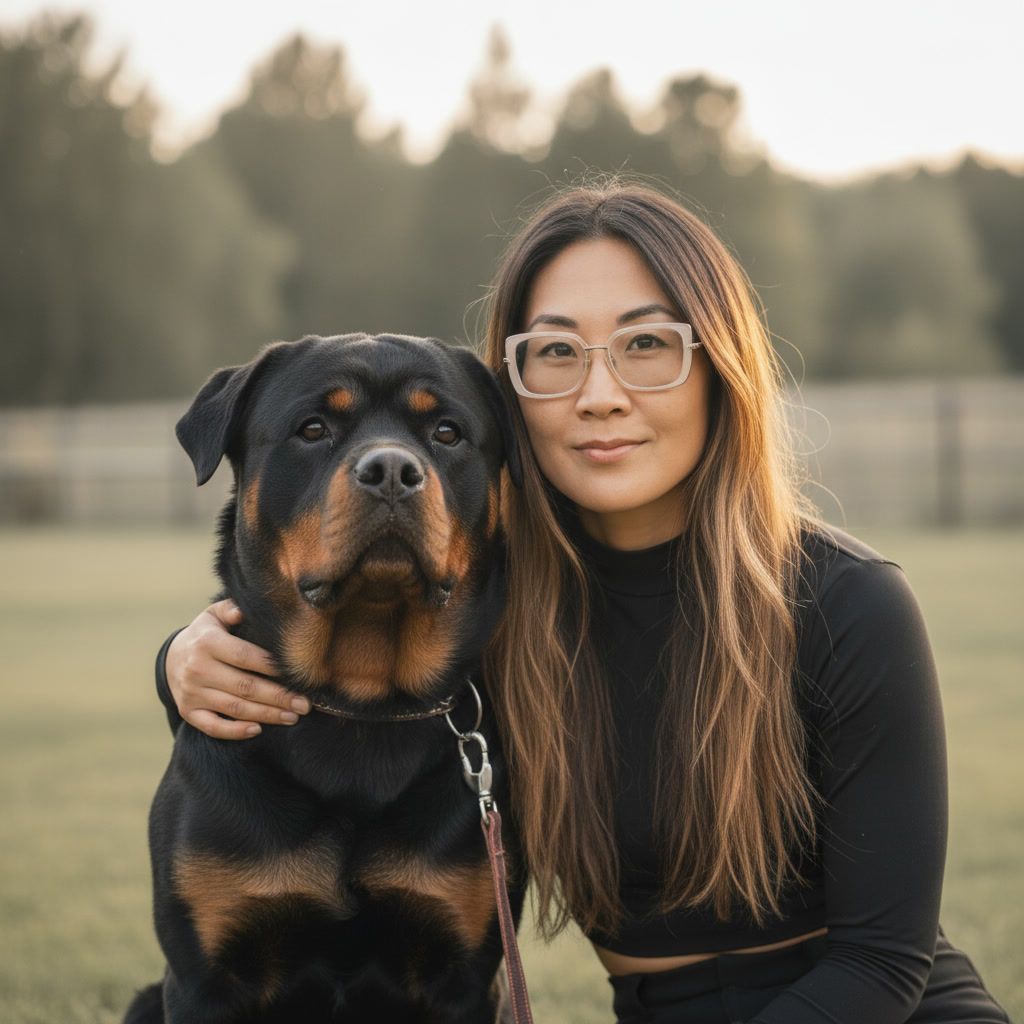
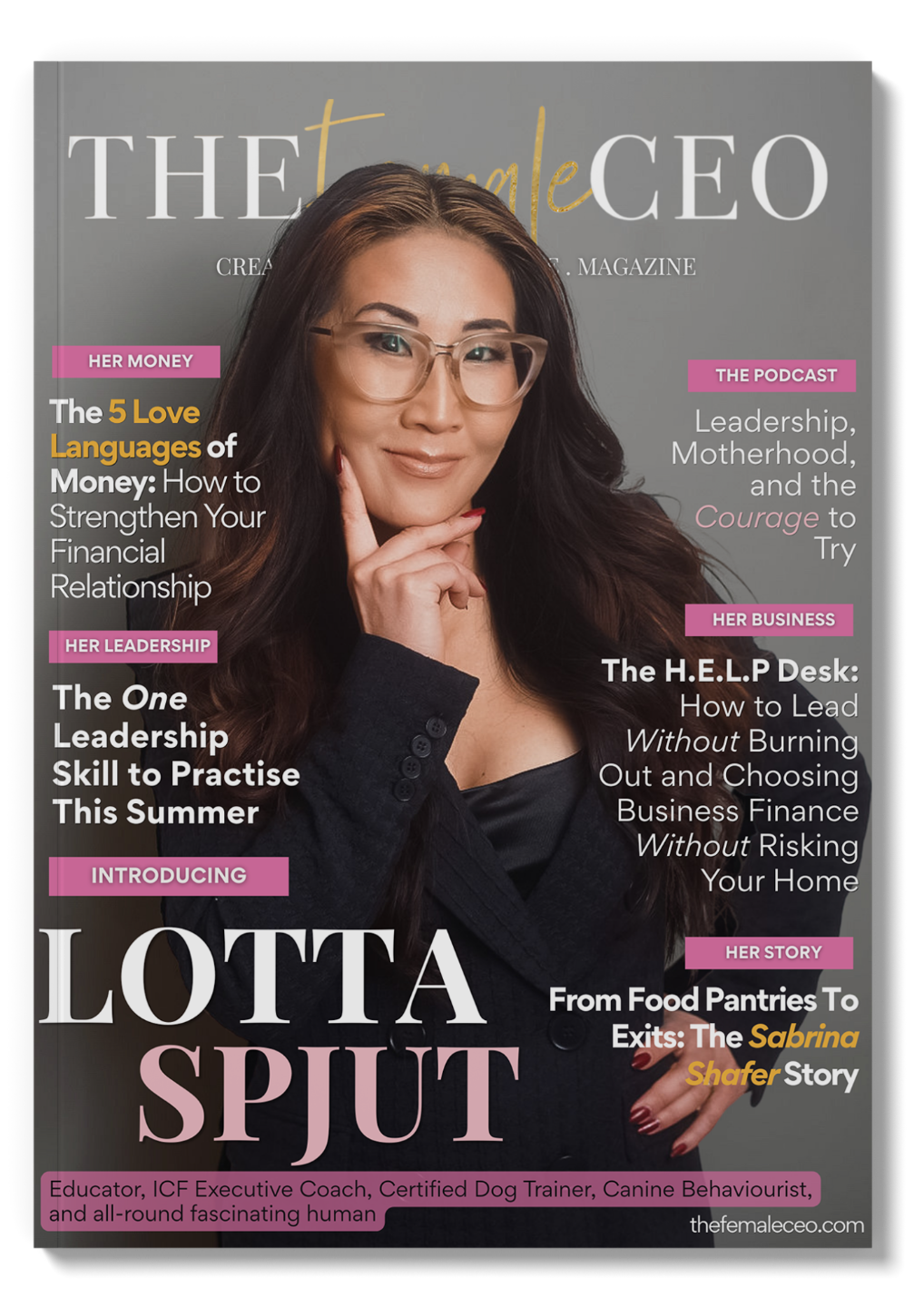
Educator, ICF Executive Coach, Certified Dog Trainer, Canine Behaviourist, and all-round fascinating human, Lotta Spjut is the kind of woman whose story makes you lean in a little closer. With over 25 years of experience across education, leadership, coaching and health, she has spent her career helping people understand themselves, others, and how lasting change happens. But it wasn’t until a Rottweiler named Ecco trotted into her life that things got really interesting.
Here’s the thing about dogs — you cannot fool them. They don’t care about your title, your track record, or how well you hold it together in a meeting. They respond to what is actually happening beneath the surface. They feel your energy, your emotions, your stress, your confidence, and whether you're truly present or not. When Lotta discovered that her own nervous system was directly influencing Ecco's behaviour, something clicked. The woman who had spent decades coaching others through fear and growth suddenly had a four-legged teacher of her own — and she was humble enough to pay attention. What began as a passion for dogs became a deeper exploration of behaviour, communication, emotional awareness, and self-leadership. She retrained as a certified dog trainer and canine behaviourist, made the brave decision to slow down, travel less and be more present, and built something completely new.
Today, Lotta's work sits at the intersection of human behaviour, communication, leadership, self-leadership, and the relationship between humans and dogs. Her philosophy is simple: understanding creates change. Whether she is working with people, dogs, or the humans behind the leash, her focus remains the same – helping others build trust, awareness, and stronger relationships through greater understanding. She is also involved in building a new international platform designed to bring together education, services, businesses, and communities that support the wellbeing of dogs and the people who love them. While still in development, the vision reflects the same values that have guided her career: connection, learning, trust, and meaningful change.
What makes Lotta's story so compelling is that it isn't really about dogs at all. It's about people. It's about how we lead ourselves, how we communicate, how we build relationships, and how our behaviour shapes the world around us. Warm, sharp, and genuinely one of the most interesting conversations I’ve had in a long time, Lotta Spjut is proof that the best reinventions don’t happen in spite of who you are; they happen because of it.
Over to you, Lotta...
So Lotta… What's your story? You've moved through teaching, leadership, coaching, health, emotional development and now into the world of dog behaviour and self-leadership. Looking back, can you see the 'red thread' that connected it all?
Yes, I can see it much more clearly now than I probably could when I was in the middle of it. The red thread has always been behaviour, communication, development, and growth, first through education, then leadership, health, coaching, entrepreneurship, and now through the relationship between humans and dogs.
I started my professional life as a teacher, and teaching is really about so much more than sharing knowledge. It is about understanding people. It is about seeing where someone is, what they need, what blocks them, and how to help them move forward. That has followed me through everything I have done.
Later, when I worked with leadership, union work, school development, coaching, health, stress, and personal development, the same questions kept coming back in different forms. Why do we behave the way we do? What creates trust? What helps people grow? What happens when fear, stress, or uncertainty takes over?
When Ecco came into my life, those same questions appeared again, just in a different relationship. Suddenly, the theory became very visible. I could see how my own emotions, my body, my timing, and my inner state affected him.
So even though it may look like I have moved into something completely new, I actually feel that Lotta Dog PT is a natural evolution of everything I have worked with for more than 25 years. It is still about behaviour, communication, trust, emotional awareness, and sustainable growth. The difference is that now the dog makes the human part impossible to ignore.
You took a huge leap when you left the security of teaching to build your own business. What did that season of your life teach you about courage? Many women reading this will be standing on the edge of a big decision themselves — the kind where everyone around them thinks they're slightly crazy. What would you say to that woman?
I would say that courage does not always feel brave when you are in it. Sometimes courage feels like doubt, fear, and excitement all at the same time. It can look very confident from the outside, while inside you are asking yourself, “What am I doing?”
When I left teaching, I was leaving something secure and respected. I had a stable profession, a clear identity, and a path that made sense to other people. Starting my own business did not feel logical to everyone around me. Yet I had this strong feeling that there was more I wanted to do, more I wanted to create, and more I wanted to influence.
That season taught me that courage is not the absence of fear. Courage is the decision to move with fear, not be stopped by it. I also learned to be careful about whose advice I allowed to guide me.
Many people give advice from love, concern, fear, or their own limitations. They may truly want the best for you, but that does not always mean their advice is built on experience or knowledge of the path you are about to take.
I believe we can listen to many people, though we should be selective about whose advice we actually follow. Take advice from people who have walked the path you are considering, or from people you would genuinely be willing to trade places with in that area of life. That does not mean ignoring others. It means understanding where the advice is coming from.
To the woman standing on the edge of a big decision, I would say: prepare well, listen carefully, and then choose your advisors wisely. Not everyone needs to understand your dream before you begin.
You do not have to jump blindly. You can prepare, learn, build support, and take wise steps. But if the only reason you are staying is because other people feel safer when you remain the same, then it may be time to listen more deeply to yourself.
Growth often looks slightly crazy before it looks obvious.
You've said that leadership, communication and emotional awareness have shaped every chapter of your career. What does 'self-leadership' mean to you personally? And why do you believe it matters so much — not just in business, but in relationships, parenting, entrepreneurship and everyday life?
For me, self-leadership is the foundation of all leadership.
It is the ability to pause, notice what is happening inside you, and choose how you want to respond instead of simply reacting from fear, stress, habit, or ego.
It does not mean being calm all the time. That would not be human. It means taking responsibility for your own state, your own communication, your own boundaries, and your own growth.
The most important person we need to learn to lead is ourselves. If I cannot lead myself, it becomes very difficult to lead anyone else in a healthy way, whether that is a team, a business, a child, a client, or a dog.
In business, self-leadership affects how we make decisions, how we handle pressure, and how we communicate when things are difficult. In relationships, it affects whether we listen or defend ourselves. In parenting, it affects whether we guide or simply react.
With dogs, it becomes incredibly clear because they respond so quickly to our emotional state.
I believe self-leadership matters because our internal environment always influences the external environment. We may think we can hide what is happening inside, but in reality, our nervous system, body language, tone, timing, and energy communicate long before our words do.
That is why self-leadership is not a soft skill to me. It is one of the most important foundations for trust, safety, and sustainable success.
Ecco didn't just change your lifestyle — he changed the way you understood yourself. You've spoken about how your dog's behaviour forced you to look at your own emotions, energy and reactions in a completely new way. What did that experience reveal to you?
Ecco revealed something I thought I already understood, but clearly needed to experience in a much deeper way.
I had worked with people, leadership, coaching, fear, stress, and behaviour for many years. I understood intellectually that our inner state affects others. Yet with Ecco, I could not talk my way around it. He responded to what was actually happening in me.
When Ecco entered adolescence at around 9–10 months old, he started reacting to certain dogs, people, and environments. As that happened, I began anticipating those situations. I shortened the leash. My body became tense. I scanned the environment. I thought I was preparing, but I was also communicating concern.
And of course, he felt that.
That was a very humbling experience.
It revealed that awareness is not something we only teach others. It is something we have to practice ourselves, again and again.
It also showed me that the dog is not only a dog to train. The dog is also a mirror. Not in a mystical way, but in a very practical, biological way.
Ecco helped me see where I needed to become clearer, calmer, and more grounded. He made my own self-leadership visible.
That has changed the way I work, the way I train, and the way I support other dog owners. Because often the question is not only, “How do we change the dog’s behaviour?” It is also, “What are we bringing into this situation, and what can we change in ourselves?”
One of the most fascinating things you shared was realising that your own nervousness was directly affecting Ecco's behaviour. How did that moment of recognition change the way you think about fear, emotional regulation and leadership?
It changed everything because it made the connection so clear. When I became nervous, Ecco did not understand the full human story behind it. He did not know that I was thinking, “What if he reacts?” or “What if I cannot handle this situation?”
He only felt the result. A tense body. A shorter leash. A different breathing pattern. A different energy. To him, that could mean: something is wrong, and I may need to step in.
That made me realise how often we communicate fear without meaning to, not only with dogs, but with people too. In leadership, the same thing happens. If a leader enters a room stressed, defensive, or unclear, people feel it. They may not always be able to explain it, but their nervous systems respond.
That moment with Ecco deepened my understanding of emotional regulation. It is not about pretending to be calm. It is about becoming aware enough to regulate yourself before you try to lead the situation.
Fear is not wrong. Fear can protect us. But unexamined fear can also start leading us. For me, leadership begins when we can notice fear without handing it the steering wheel.
You have a beautifully specific way of thinking about fear — the idea that a feeling can't exist without a thought arriving first. How does that insight change the way you approach self-doubt or moments of overwhelm? And what would you say to the woman reading this who feels stuck in fear right now — what's the first step she can take?
This is something I have worked with for many years, both in myself and with others. Fear is natural. It is part of our survival system. Our brain is designed to protect us, and anything new or uncertain can be interpreted as a possible threat. That is why I often say that fear is not always proof that something is wrong. Sometimes it is simply proof that something is unfamiliar.
I also believe that many times it is not only fear of failure that stops us, but fear of success, especially for women. Success can mean visibility, responsibility, judgement, and change.
One way I have often explained fear is: False Evidence Appearing Real. Our mind can create worry and anxiety from thoughts that feel completely true, even when they are not based on facts.
This is where the TFAR model becomes powerful: Thoughts, Feelings, Actions, Results. We often say, “I feel useless at this,” or “I don’t feel ready.” But before that feeling, there is usually a thought.
“I am not good enough.”
“I will fail.”
“She has better opportunities than I do.”
Those thoughts create feelings. Those feelings influence our actions, or our lack of action, because doing nothing is also an action. And the result follows.
A feeling often seems to arrive on its own, but very often there is a thought, an interpretation, or an inner story that comes first. Sometimes it happens so quickly that we do not notice it. That means we can begin to work with fear by becoming curious about the thought behind it. Not by judging ourselves. Not by forcing positive thinking. Simply by asking:
“What am I telling myself right now?”
“Is it true?”
“Is it helpful?”
“Is there another way to look at this?”
For the woman who feels stuck in fear, I would say: pause, breathe, and write down the thought that is creating the strongest feeling. Then ask yourself: what is the next wise step, not the perfect step?
Fear often becomes bigger when it stays vague. When we name it, we can begin to lead it.
There's something you've said that I haven't been able to stop thinking about: 'You cannot fool a dog.' You can sometimes mask your feelings from the people around you, but a dog reads your true emotional state every single time. What does that tell us about authentic leadership — and what have you had to confront in yourself because of it?
It tells us that leadership is not only what we say. It is what we transmit. With people, we can sometimes hide behind words, titles, roles, or polished communication. We can say, “I am fine,” while our whole body says something else. A dog does not care about the polished version. A dog reads the real version. That is one of the most beautiful and challenging things about dogs. They bring us back to honesty.
For me, that meant I had to confront my own incongruence. I could not tell Ecco, “Everything is fine,” while my body was saying, “I am worried.” He believed my body, not my words.
That has made me even more convinced that authentic leadership is not about being perfect. It is about being aligned. It is about becoming aware of the gap between what we say and what we actually communicate.
I do not believe a leader has to be calm, strong, and certain all the time. That is not real. But I do believe we need to be honest enough with ourselves to know what we are bringing into the room, or into the leash. Because others feel it. And if we want to create trust, we have to start with ourselves.
You've worked with people for years, but now you often say you're still really working with humans — just through the lens of dogs. What have dogs taught you about human behaviour that perhaps humans themselves struggle to see?
Dogs have taught me how much we communicate without words. Humans often focus on what we say. Dogs focus on what we do, how we move, how we breathe, how consistent we are, and whether our signals make sense.
That has taught me a lot about clarity. We humans often think we are clear when we are not. We give mixed signals. We change rules depending on our mood. We expect others to understand something we have not actually taught them. Then we become frustrated when the response is not what we wanted. Dogs make that very visible. They have also taught me how quickly we can move into blame when we do not understand behaviour.
We say the dog is stubborn, difficult, dominant, or disobedient. In reality, the dog may be confused, stressed, under-stimulated, over-aroused, afraid, or simply not trained for that situation yet.
And I think humans do the same with each other. We label people instead of becoming curious about what is behind the behaviour. Dogs have taught me to ask better questions.
What is the behaviour telling us? What need is not being met? What has been reinforced? What is unclear? What is the emotional state behind this? That is why I often say I do not work only with the dog. I work with the human behind the leash.
You made a conscious decision to slow down, travel less, and be more present with your family. In a world that constantly tells women to do more, scale faster and keep pushing… What does success look like to you now?
Success looks very different to me today than it did earlier in my life. I am turning 52 this summer, and I reached a point where I had to ask myself quite honestly: who are you fooling?
I love to work. I love to develop, create, learn, and build. That part of me is still very much alive. But I also realised that I was not always as present as I wanted to be. Physically, I could be there. But mentally, I was often already in the next project, the next idea, the next thing that needed to be done. And the things that matter most to me, my family, my own wellbeing, my presence, were sometimes paying the price.
That was not sustainable. It was also not fully aligned. I was speaking about health, balance, self-leadership, and sustainable growth, but I had to look honestly at whether I was living it myself.
Being genuine is very important to me. I know I will never be liked by everyone, and that has never been my goal. But for the people who truly know me, I want them to feel that I am real, that I care, and that I try to live what I teach. For many years, I worked a lot, travelled, built businesses, created projects, studied, developed myself, and kept moving forward. I am grateful for that part of my life because it gave me so much experience, learning, and courage.
But there came a point where I realised that more is not always better. More work, more travel, more visibility and more responsibility. It can look successful from the outside while something inside starts to feel less alive. Today, success is not only about what I build. It is also about how I live while I build it. It is being present with my family. It is having space for Ecco, training, nature, and learning. It is doing meaningful work without losing myself in the process. It is building something that feels aligned, not only impressive.
I still have ambition. I still love development, ideas, business, and growth. That has not disappeared. But I want growth that is sustainable. For me, success now means creating a life and business where my energy, values, relationships, and purpose can exist together.
You're currently building something much bigger than one-to-one training — a platform designed to create more trust, education and ethical standards within the pet world. What kind of legacy do you hope to create through this next chapter?
This next chapter is very exciting, and it is still in its early stages, so I want to speak about it with care. Lotta Dog PT is one important part of my direction, where I work with the relationship between dogs and humans, behaviour, self-leadership, and education.
Alongside that, I am also involved in the early development of a broader international dog-focused business direction together with others. It is not only about dog owners, and it is not only about training. It is about the wider dog ecosystem. That includes dog owners, professionals, trainers, brands, services, communities, and organisations that support dogs. My hope is to contribute to something that creates more trust, better education, stronger ethical standards, and more meaningful connection in this space.
There is so much passion in the dog world, but there is also a lot of confusion. Dog owners are often overwhelmed by conflicting advice. Professionals and brands can struggle to be seen in a trustworthy way. Organisations helping dogs often need more support and visibility.
If my background in leadership, education, coaching, business, human behaviour, and dogs can help build bridges between these parts, that feels meaningful to me. The legacy I hope to create is not about being the loudest voice. It is about helping create structures where better knowledge, better choices, and better relationships become easier to access. For me, that is real impact.
How would your best friend describe you in three words?
I think she would probably say: curious, driven, and caring.
Curious because I always want to understand more. I ask questions, I study, I reflect, and I rarely accept simple answers to complex things.
Driven because when something matters to me, I put my whole heart into it. Sometimes probably a little too much.
And caring because beneath everything I do, whether it is with people, dogs, business, or family, I genuinely care about helping others grow and feel understood.
If she were allowed to add a fourth word, she might say stubborn, but hopefully in a good way.
If you could go back and speak to the version of yourself who was afraid to take the leap… what would you tell her?
I would tell her to trust herself more. Not because she will have all the answers, but because she has always been willing to learn. One of the things that has served me well throughout life is that I have never felt I needed to know everything before I begin. I think things through, I prepare, and then I take the next step.
My mindset has often been simple: What I do not know, I can learn.
Looking back, I can see that some people thought I was taking risks or moving too quickly. What they did not always see was that I believed in my ability to learn, adapt, and figure things out along the way. Growth rarely comes from having everything planned. It comes from being willing to take action, learn, adjust, and continue moving forward.
I would also tell her not to compare herself with people who are already far ahead on the path. Comparison is one of the fastest ways to make yourself feel like a failure before you have even started. We rarely compare ourselves with someone standing at the same starting point. We compare ourselves with people who have already built, learned, failed, practised, and grown for years. Instead of comparing, be inspired. Look at what they have done. Learn from them. Ask questions if you can. Let their journey show you what is possible, not what is wrong with you.
The only meaningful comparison is with the person you were yesterday. The goal is not to become someone else. The goal is to become a little more aligned, a little braver, and a little better according to your own values and goals.
I would also remind her to separate who she is from what she does. You will make mistakes. You will make decisions that do not work out as planned. And you will learn. That does not mean you are not enough. It means you are human. Pay attention to how you speak to yourself, because that inner communication will either help you move forward or keep you stuck.
I would tell her to take advice from people who have already walked the path she wants to walk. Listen to everyone if you choose, but be careful whose advice you follow. Not everyone giving advice has the experience or perspective you need for the journey you are taking.
I would also tell her not to let other people’s negativity take root inside her. Some people get energy from being unkind, often without even knowing you. Do not feed that by giving it all your attention. Meet people the way you want to be met, stay open, stay kind, and keep moving.
And I would remind her that the experience she already has will not disappear just because she steps into something new. That is something I understand much better today. Every chapter has given me something I now use in the next one. Teaching, leadership, coaching, health, entrepreneurship, and even the difficult periods — none of it was wasted. Trust that you are not starting from zero. You are starting from experience.
I would also tell her not to waste energy on things she does not yet know. So much energy is lost in imagined problems. Save that energy for when you actually need it. Stay open to opportunities. Gather the facts before you judge them. Then decide.
And finally, I would tell her to keep moving. Progress is rarely about having all the answers. It is about taking the next step with courage, curiosity, and a willingness to learn.
Start where you are. Use what you have. Do what you can.
I love that quote from Arthur Ashe because it reminds us that progress does not begin when everything is perfect. It begins when we take the next step with what is available to us today.
What motivational or empowering song would you like us to add to The Female CEO playlist for your feature and why?
One song that comes to mind is “This Is Me” from The Greatest Showman. For me, it represents the courage to stand in who you are, even when your path does not look like everyone else’s. It is about owning your story, including the parts that were difficult, unexpected, or misunderstood, and still choosing to show up. That feels very connected to this chapter of my life. Not because everything is perfectly finished, but because I am stepping into a new direction with more honesty, more alignment, and more trust in the red thread that has been there all along.
If I were to add three more songs that never fail to energise me, they would be:
- “Unstoppable” by Sia, because it reminds me of resilience, determination, and the strength we often discover after facing challenges.
- “Go” by The Chemical Brothers because it captures momentum, action, and the willingness to keep moving forward even when the path is not completely clear.
- “Extreme Ways” by Moby, the Jason Bourne theme. I have always loved both the films and the song because it reflects courage, reinvention, and stepping into the unknown with curiosity rather than fear.
Together, those songs probably describe both sides of me: the reflective side that values authenticity and purpose, and the action-oriented side that believes growth comes from learning, adapting, and continuing to move forward.
What do you know for sure? After decades of leadership, coaching, entrepreneurship, personal growth and reinvention… What is one truth about life or business that you've come to trust deeply?
What I know for sure is that the most important person we need to learn to lead is ourselves. Everything begins there. Our thoughts, our emotions, our nervous system, our communication, our boundaries, our ability to pause, all of that shapes the relationships and environments we create.
We can have strategies, goals, business plans, methods, and dreams, and they all matter. But if we do not understand ourselves, we will eventually recreate the same patterns in new places. I also know that growth rarely looks like a straight line. Sometimes the thing that looks like a detour becomes the path.
For me, Ecco looked like a long-awaited personal dream. He became a teacher, a mirror, and the beginning of a new professional chapter. So one truth I trust deeply is this: When we learn to lead ourselves with awareness, honesty, and courage, we change not only our own life, but every relationship we are part of.
You can check out more on Lotta's websites https://www.lottaspjutbusiness.com/ , https://www.lottadogpt.com and connect with her on Instagram, Facebook or LinkedIn