The Remarkable Story Of Shauna Moar: From Shetland To The World Stage
She holds a deadlift world record and competes against the strongest women in the world, yet Shauna Moar grew up believing she was the opposite of strong. This is how she proved otherwise, and built a gym where everyone belongs.
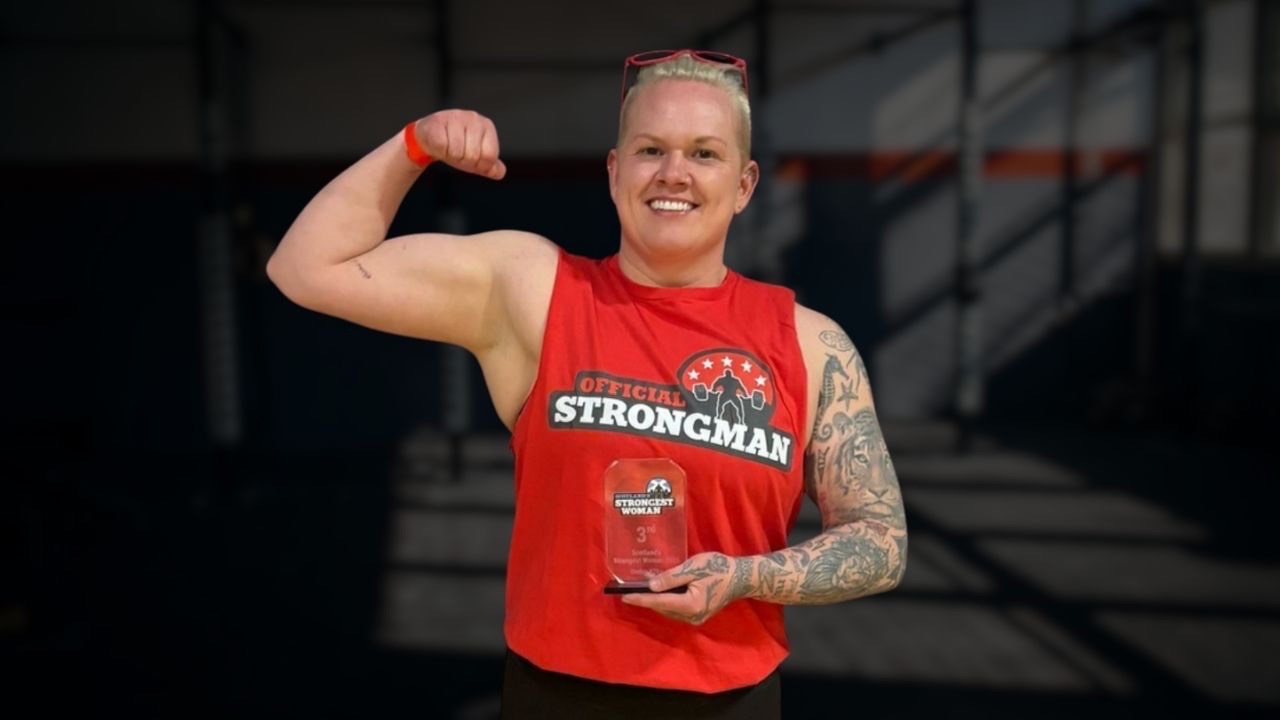
People tell Shauna Moar she is strong all the time now. Of course they do. She competes internationally in strongwoman, holds a trap bar deadlift world record and has spent the last decade lifting weights most of us would struggle to imagine moving at all. Her career has taken her from a shed in Shetland to world championships, and these days she walks into rooms where, increasingly, people already know who she is. What still catches her off guard is that strength was never how she saw herself.
“In my mind I wasn’t strong,” she tells me over a virtual coffee with her sleeping dogs Dora & Daphne in the background; they are also her gym mascots. That might sound extraordinary coming from a woman whose world record currently stands at 285kg, but Shauna spent most of her early life receiving a very different message from her body.
She was four when her family were finally given a diagnosis. Her mum had always known something was different; Shauna was the eighth of nine children, so there was plenty of experience in the family of what babies ordinarily did and how they moved. Shauna did not move in quite the same way. Doctors initially struggled to explain why and, after first suspecting cerebral palsy, an elderly paediatrician later diagnosed benign congenital hypotonia, a condition characterised by low muscle tone that affects Shauna’s balance, coordination and the connection between what her brain tells her body to do and what it is actually able to execute.
“There is no treatment, there is no cure,” Shauna says. What there was, according to the paediatrician, was time. He believed Shauna’s childhood years offered an important opportunity to build her gross and fine motor skills, so his advice to her parents was to get her doing as much as possible: sport, movement, activities involving her hands, anything that would help her body learn. The alternative he gave them was stark: Shauna could grow up to need a wheelchair.
Her mum appears to have heard that prognosis and regarded it as information rather than an instruction. “My mum is more stubborn than me,” Shauna says, before immediately adding, “and I’m a very stubborn person.” That stubbornness would prove useful.
Learning What Her Body Could Do
Shauna began swimming and horse riding when she was four. At Riding for the Disabled, the exercises looked simple enough from the outside (lean forward and touch the horse’s ears, turn around towards its tail, move her body while the horse continued walking underneath her), but for Shauna, it was balance training. “My balance was one of my worst symptoms,” she says. “If I hadn’t done those things, it would still be as poor as it was when I was four.”
Physiotherapy followed too, although Shauna’s childhood memory of it is considerably more cheerful than the word might suggest. “I went to this place and played with toys for an hour.” One of those “toys” was an enormous spring she would kneel on while the physiotherapist pushed it in different directions, forcing Shauna to respond and correct herself.
Then there were the ordinary things other children learned without ever having to think about them. If Shauna’s arm did not naturally move in the way required to put on a coat, she practised until she found a way. When the usual method of tying shoelaces did not work, she developed her own, making two loops separately. She still ties them that way now.
Her mum’s approach was consistent: she did not rush in to do things for Shauna simply because they took her longer. “She made me do everything by myself rather than doing it for me.” It was the late eighties and early nineties, when conversations around disability and difference looked very different from today. “It was kind of a hush-hush thing,” Shauna remembers. “You’re the same as everyone else. You do the same as everyone else.” So she did.
When her Brownie pack set a skipping challenge, Shauna could not skip. She came home soaked in sweat, prompting her mum to ring the Brownie leaders and ask what on earth they had been doing. The answer was simple: Shauna had refused to stop until she had completed it.
She got the badge.
What People Still Don’t See
It would be easy, looking at Shauna now, to tell this as though those early difficulties were conquered and left behind. They weren’t. Benign congenital hypotonia is still part of her everyday life, and some of the most ordinary situations can demand a level of conscious effort that other people never have to consider.
If she reaches a puddle in the path, she can stop dead. “I’ve got to tell myself, ‘You’re going to have to jump over it. You’re not going to fall in it. You’re not going to fall over.’” Cobbles can cause the same response: her brain can seem to shut down until she stops, resets and consciously reminds herself how to move across them. In the dark, it is harder again. There is tiredness too, and periods of brain fog; even during our conversation, Shauna warns me that she may occasionally lose where she is going in a sentence.
The contrast between those everyday moments and what her body can do in competition is extraordinary. This is a woman capable of lifting 285kg, and both things are true. It is also part of why Shauna has only recently started talking publicly about her health. For years, almost no one knew. “I didn’t want to be treated differently,” she says. “Or given special passes.”
She had already reached the highest levels of strongwoman before many people around her knew the full story. People would look at her and tell her she must be naturally strong, and her reaction was always roughly the same: actually, no. “It’s the opposite.”
The First People To Call Her Strong
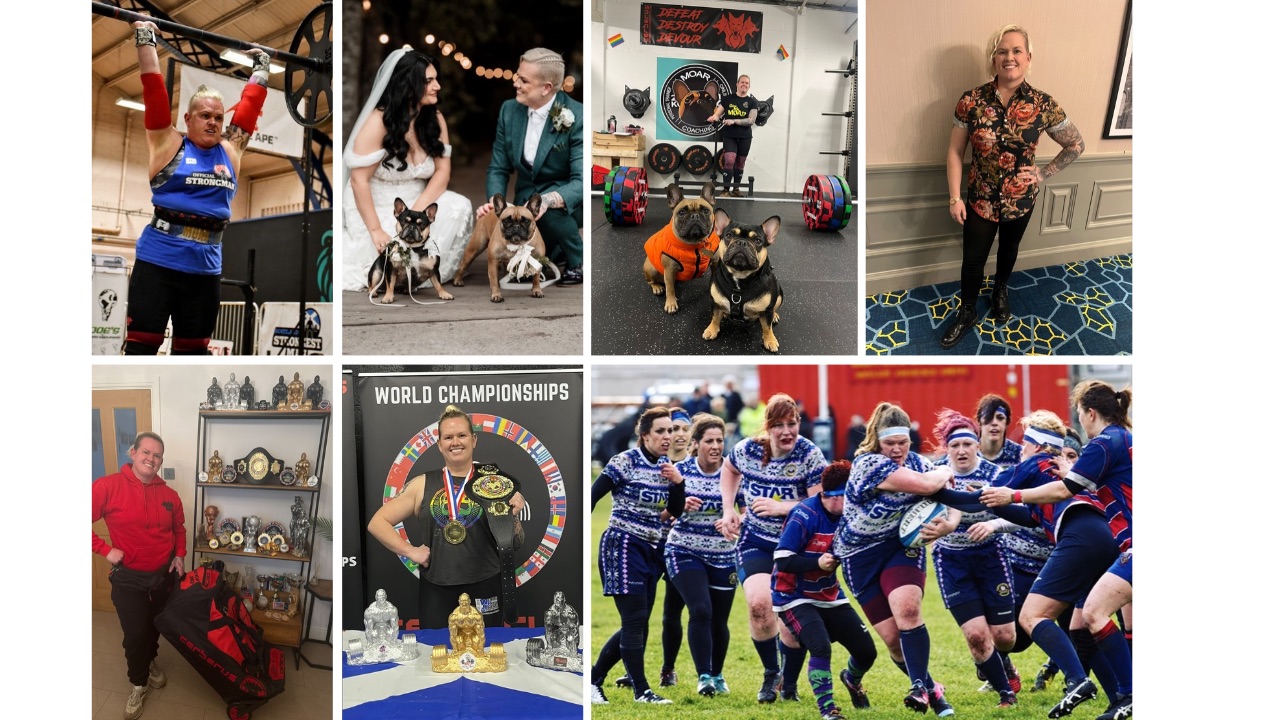
Sport dropped away for a while as Shauna got older. She studied business by distance learning from Shetland while working and, for a time, the girl whose childhood had been structured around physical activity was not doing much of it at all. Then she saw a notice in the local newspaper: Shetland was starting a women’s rugby team and needed players.
Shauna had never played rugby. She went anyway.
Five years later, she had represented Shetland, been named player of the year and become one of the team’s leading try scorers, despite playing as a prop. “That’s just because I would not give up.” Her coach noticed something else too: Shauna could read a game. He told her that relatively few players can instinctively see what is unfolding around them and respond in real time, yet Shauna could do it almost from the beginning.
That contradiction still fascinates her. “I have this condition where I have to tell my brain to do things. But I can read the game in a way other people can’t.” Then her teammates started making a comment she found even stranger: they kept telling her she was strong.
“It felt like a strange comment,” she says. “I’d always been told, or felt like, I wasn’t strong. In my mind I wasn’t strong. But to the people watching what I could do on the pitch, I was.” Eventually one of those teammates took her to the gym, and Shauna started lifting weights. For perhaps the first time, strong began to feel like a word that might belong to her.
A Shed In Shetland
Shauna’s brother was already competing in strongman, training in a shed in the middle of nowhere in Shetland that was filled with the specialist equipment the sport demands. That was where she learned. Women’s competitions were far less common then, and when her brother found one and showed her the events, Shauna looked at the weights involved and immediately recognised that she could not yet do most of them. Her response was not to wait until she could. “But I’m going to do it.”
At her first competition, Shauna won three of the six events and finished fourth overall. It was an extraordinary start, although Shauna could already see how close she had come to the podium. By her third competition, Scotland’s Strongest Woman in 2018, she came second against women she had previously watched from a distance.
There were setbacks after that: injury, then COVID and the closure of gyms. Weights disappeared from shops almost immediately, so Shauna improvised. Working as a self-employed dog walker at the time, she filled two-litre bottles with water, packed them into a rucksack and trained with whatever she could find. When normal competition returned, she returned with it.
Then came 2021. Within a matter of months, Shauna won Scotland’s Strongest Woman, won Paisley’s Strongest Woman and became the first Shetland’s Strongest Woman. She also entered the trap bar deadlift, despite her best lift in training having been 170kg. On competition day she lifted 210kg. It was a world record.
“For about two weeks I would either laugh or cry, because I had a world record,” she says. “Even now, I can’t believe it myself.” Shauna has broken her own record repeatedly since then; in 2026, it reached 285kg. There have been world championships and podium finishes, an induction into the World Deadlift Council Hall of Fame, and the experience of becoming one of the athletes newer competitors now look towards.
“It doesn’t compute sometimes,” she says. “When I was starting out, I’d look at the elite level and think, ‘These people are amazing. Will I ever get there?’ And now people in that position are looking at me like that.”
Strength Is Not What It Looks Like
The fascinating thing about Shauna’s training is that it does not simply happen in spite of her condition; she needs it because of it. “The more fitness and strength work I do, the better I am day to day,” she says. “If I don’t train, I go backwards.”
Strongwoman training helps her maintain what her body can do, but the recovery has to look different. Where another athlete might return to training only a few days after competition, Shauna gives herself a full week because she has learned what happens if she tries to negotiate with her own nervous system. “My body will just go. I won’t be able to finish.”
There is little room for bravado when your recovery has to be part of the plan, not an afterthought, so Shauna plans carefully, rests deliberately and works with coaches and mentors on the part of performance that no one can see from the audience. “Ninety per cent of lifting weights is your mental strength,” she says. “You need the muscles to physically lift something, but you need the mental strength to know you can do it.”
She knows something about that. Her physical achievements are enormous, but when Shauna talks about strength, she tends to return to the mind: the decision to try, the ability to keep going when something does not work immediately and the willingness to adapt rather than conclude that you cannot do it. It is also at the heart of how she coaches.
Four Mats And One Barbell
By the end of 2021, Shauna had started coaching online, with personal training following in 2022 from a small studio in her garage. She outgrew it quickly, but more importantly, her clients kept telling her the same thing: they did not like gyms. Commercial spaces felt intimidating, overcrowded or simply not designed for them.
Shauna understood the problem because she had heard it so many times, and decided to build the kind of gym those clients actually wanted to walk into. “I didn’t just want to open another gym like everyone else,” she told me when we spoke. “I wanted it to mean something.” Gym Moar began in a Middlesbrough unit with four floor mats and one barbell.
It did not stay that way for long.
Today, the space is fully equipped for strength training and strongman and strongwoman, but the equipment is only part of what Shauna has built. Numbers are deliberately capped so the room never becomes overwhelmingly busy, and members book their sessions so there is space to train and equipment available when they need it. The entrance is flat, with a wide garage-style door suitable for wheelchairs and mobility aids, while the community includes people who are neurodivergent, people from the LGBTQ+ community, experienced strength athletes, beginners and people who have spent years believing gyms simply were not places for them.
Shauna designed it for exactly that reason. “I wanted to create something for these people.” One day she watched a member walk around the gym saying goodbye to every single person before leaving. “You just wouldn’t get that in any other gym,” she says, and perhaps that tells you more about Gym Moar than the equipment ever could.
There is a lovely symmetry in it. Shauna’s childhood involved finding different ways to make her body work in spaces that were not designed around her. Now she owns one, and she has made sure other people do not have to earn the right to feel comfortable there first.
Why She Is Telling People Now
Shauna kept her condition private for years because she did not want anyone adjusting their expectations of her. Something has changed now that she has reached the highest levels of her sport. “Now that I’m at this high level, I’ve seen what I can do,” she says. “I need to help people starting out, or people who think they can’t do it.”
She is not suggesting that everyone reading this should become a strongwoman. That is not the point. “If they read my story and go, ‘Oh, I can do that,’ even if it’s not strongwoman, even if it just gets them to try something they’ve always wanted to do, then that’s why I’m sharing it.”
Shauna is still competing, so she is not telling this story from the safe distance of a finished career. Her next major target is the Official Strongman Games World Finals in Florida in November 2026, where she will compete against some of the strongest women in the world, while continuing to run Gym Moar and coach other athletes towards their own competitions and milestones.
What strikes me most is how little time Shauna spends looking backwards. Even the world record did not hold her attention for long; a lift takes less than a minute, she says, and almost immediately the question becomes what next. She admits she is trying to get better at celebrating before moving the goalposts again, which is probably no bad thing.
There is quite a lot to celebrate, after all.
Backing The Woman Behind The Numbers
What spectators do not necessarily see is how expensive competing at this level becomes. There is relatively little money in strongwoman itself, while travel, accommodation, entry fees and specialist equipment all add up, particularly as international competitions become a larger part of Shauna’s calendar.
She currently has support from Mardec Limited and Halo Physio and is looking for further businesses to come behind her as she takes the next steps in the sport. Support can range from backing a single competition to a longer-term sponsorship arrangement, but the principle is straightforward: helping Shauna compete means helping fund the very unglamorous infrastructure behind the extraordinary things she does on the platform.
And there is still somewhere else she wants to go: the invitation-only professional shows. Shauna is not finished. Not remotely.
Strong
There is a little girl in this story who cannot skip. She is standing with the rest of her Brownie pack, her body refusing to do something everybody around her seems able to do without thought. She could stop and nobody would blame her, but instead she keeps trying until she is drenched in sweat and, eventually, she gets the badge.
Years later, there is another version of Shauna standing inside a trap bar. The weight is 210kg, more than she has ever lifted before, and she picks it up anyway. A world record.
Since then, the number has become 285kg. There are podiums, international competitions, a gym, clients and people who now walk into training spaces knowing her name. Yet there are still puddles, still cobbles and still moments when Shauna has to stop and consciously tell her own body how to move. Perhaps that is why “strong” feels like such an inadequate word for what she does.
Strength is not that those things disappeared. It is not that the doctor was wrong about her condition or that enough determination somehow cured it. Shauna still lives in the same body; she has simply spent a lifetime finding out what that body can do.
Her mother started the process when Shauna was four, refusing to do everything for the child she had been told might one day need a wheelchair. Shauna carried it on: one shoelace, one swimming lesson, one rugby match, one barbell, one world record.
And now, inside a gym she built for people who have never felt entirely at home in gyms, she is handing that question to somebody else. Not “Are you strong enough?” Something much more interesting: what might you be capable of if you stopped deciding the answer before you tried?
About Shauna Moar
Shauna Moar is a strongwoman, world record holder and the founder of Moar Coaching and Gym Moar in Middlesbrough. Born in Shetland with benign congenital hypotonia, she has competed at elite level in strongwoman, built an inclusive gym for people who do not always feel at home in mainstream fitness spaces, and coaches clients both in person and online. She is currently seeking sponsorship support for her international competition season.
Tricia Scott is the Founder and Editor-in-Chief of The Female CEO — a global platform, magazine, and community dedicated to helping women build confident, aligned, powerful businesses.
A startup mentor and multi-company director, she’s spent the past decade helping women move from overwhelmed and isolated to empowered and intentional.
Most days, she’s juggling her MacBook, her next big idea, and a very necessary caffeine supply. Connect with her at thefemaleceo.com.
Want more like this?
Join The Biz Love Letter for practical business insight, founder stories and visibility opportunities every Monday — plus every new issue of The Female CEO Magazine delivered free to your inbox.
Useful stuff only. No spam, ever.