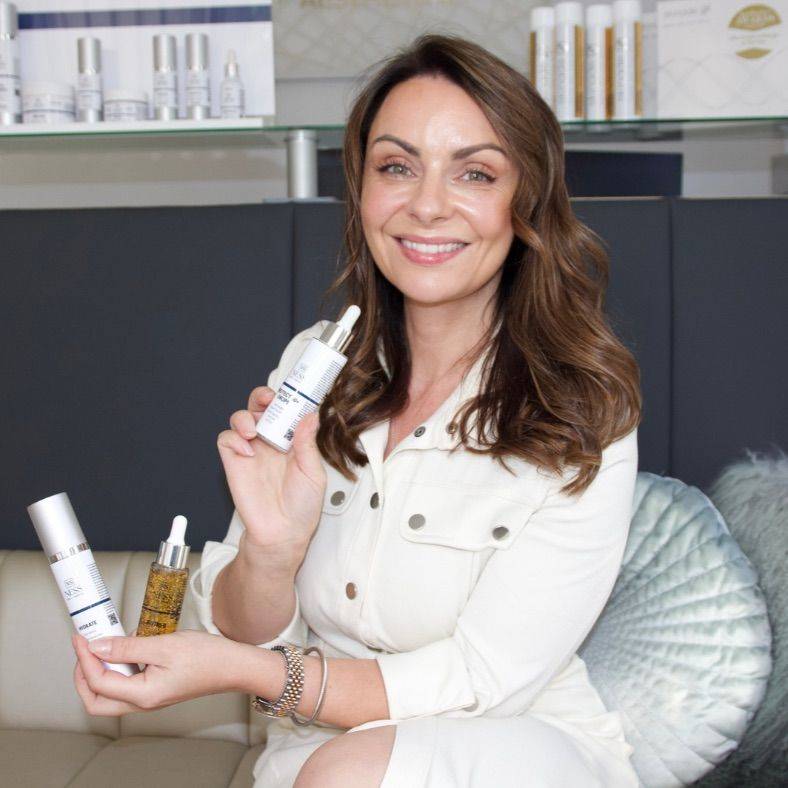
Feeling Like Yourself Again: How Stephanie Ness Is Redefining Care in Aesthetics.
Nurse. Prescriber. Myth-buster. Champion of the woman in the mirror.
Stephanie Ness has spent her career looking beneath the surface.
With more than 18 years’ experience in the NHS, including within the surgical field, and over a decade working in aesthetics, Stephanie brings a deeply clinical eye to an industry that can sometimes feel anything but. It was her own experience in the treatment chair, however, that changed the direction of her career. After having Botox in her twenties and being unhappy with the result, she did what Steph seems naturally wired to do: she went looking for answers.
That curiosity eventually became Ness Aesthetics, her CQC-registered clinic in the Worcestershire countryside, built around safety, education and a refreshingly simple philosophy: you shouldn't leave looking like somebody else. You should leave looking, and feeling, more like you. Her own website puts it beautifully: rather than comparing clients to celebrities, Steph wants to compare them to themselves.
And increasingly, her work goes far beyond what happens in the treatment chair.
After years of seeing women arrive with bathroom cupboards full of products that didn't work together (often overwhelmed by trends, ingredients and very clever marketing), Steph began developing her own skincare range. The goal wasn't more stuff. It was less confusion: science-backed formulations, thoughtful routines and education that helps women understand what they're actually putting on their skin.
There is another side to Steph’s story too. As Ness Aesthetics continues to grow, so does her role within it: from clinician and practitioner to founder, educator and increasingly, the visible voice of the brand.
It is a natural evolution for someone with so much knowledge to share, and one that feels especially timely as more women look for trustworthy, informed voices in an industry that can often feel noisy and confusing.
Clinical precision, a nurse's heart, a founder learning to take up a little more space, and zero tolerance for beauty-industry nonsense. We knew she was our kind of woman.
Over to you, Stephanie…
So Stephanie, what’s your story? We read that you grew up learning practical skills from your dad and that, at one point, you even wanted to become a plumber. Tell us a little about those early years. Do you think they shaped the way you approach life and business now?
Oh my gosh, my dad used to say he'd got me and my brother the wrong way round. Jason was the pen pusher, and I was the practical one, always eager to please and happiest with a drill in my hand. That being said, my father was an incredibly clever man. I'm convinced he could have engineered an entire plane if he'd had the chance.
My dad raised both me and my brother, and female influence was fairly scarce. He was incredibly strict, so there was no spending afternoons playing in the park with friends. Most of my childhood was spent in my father's workshop, watching him craft, work a lathe, fix boilers, and take engines apart. Whatever he worked on always seemed to come back together better than before. It worked better, functioned better, and had been cared for in a way that ensured it would last. His motto was always, "If you can break it, you can fix it."
I loved understanding how things worked, and the truth is, I did want to take over my father's business one day. At the same time, I had other passions too. I loved painting, drawing, nature, and horse riding. The bigger the jump and the faster I could go, the better. More than anything, though, I think what I was really searching for was independence. I wanted to build something of my own, so at 19 I moved out and started crafting my own future.
That's where life took an unexpected turn.
I decided to become a nurse. My stepmother, who was only part of our family for a short time but nevertheless became an important female role model to me, sadly passed away after just a few years. By the age of 14, I found myself back in the role of the woman of the house. Around that time, I decided that nursing would allow me to give something back to the world.
I qualified as a nurse at 23, and by 24 I was already aiming for management and successfully moved into leadership roles. From there, I wanted more. I wanted to prescribe, diagnose, and eventually build my own clinic, although at the time I wasn't entirely sure what that clinic would look like.
Now I often joke that I once wanted to be a plumber, and these days I "plumb faces." I contour, sculpt, and help restore confidence for my patients in a way that looks natural and authentic. While the industry is very different from what I imagined as a child, the principles are surprisingly similar: precision, problem-solving, craftsmanship, and caring for something in a way that helps it last.
Nursing taught me far more than clinical skills. It gave me leadership rather than simply management skills. It taught me how to read people, communicate effectively, negotiate care plans, and support individuals during some of the most vulnerable moments of their lives. It helped shape the person I am today, taught me how to perform under pressure, and gave me confidence in my ability to adapt to any challenge.
I've had several careers and every one of them has taught me something valuable. Looking back, I can see that I've always had a mechanical mind. I wasn't naturally academic; I was hands-on. If something didn't interest me, I'd find myself daydreaming, and occasionally I still do. But as I've grown older, I've realised that the practical problem-solving skills I learnt in my father's workshop have followed me throughout my life.
Whether it's fixing a boiler, leading a team, diagnosing a patient, or delivering aesthetic treatments, I approach everything with the same mindset: understanding how things work, taking a 360-degree view, working with precision and accuracy, and never cutting corners.
So yes, those early years absolutely shaped the way I approach both life and business. My father taught me resilience, curiosity, craftsmanship, and independence. Nursing taught me leadership, empathy, and how to perform under pressure. Together, they've helped me build the business and person I am today.
At 26, you had Botox yourself and the result wasn’t what you expected. That experience sent you looking for answers, not just about what had happened, but about how these treatments actually work. How did that moment ultimately change the course of your career?
It was an absolute knock to my confidence. I'd just met my husband, and I went from being an overly confident young woman to someone who wanted to hide away. I panicked about the way I looked and became convinced that everyone else could see me the way I saw myself. I used my hair to cover my face, and I genuinely worried that my husband would walk away.
The impact of looking different hit me so hard that I forgot I had a personality. Once the initial shock wore off, I started asking myself, "How many other women have experienced this?"
I replayed the entire experience in my mind. There had been no real consultation, no advice about potential side effects, and no clear discussion about what I was hoping to achieve. At the time, aesthetic treatments were becoming increasingly popular, and it felt like something everyone was just starting to do. Even though I had already been nursing for some time, it hadn't really registered with me that the procedure involved the prescription of a drug. The side effects had never been made known to me, and that ultimately left me questioning what had gone wrong.
I became determined to understand the mistakes that had been made. Was the dentist who had administered the Botulinum Toxin A responsible, or was it my responsibility for not asking more questions?
I then contacted a well-known practitioner in the area. She assessed me and explained that there was very little that could be done. The good news was that there would be no long-term effects, but I would need to wait a few months for my muscles to recover and return to their normal function.
That consultation changed everything.
I fell in love with the practitioner. It wasn't just her knowledge, but the way she made me feel. The way she delivered her consultation, the reassurance she gave me, the hope she restored, and the beautiful clinic environment all had a huge impact on me. I walked in feeling defeated and left feeling empowered.
That was the turning point.
I realised that I wanted to make people feel the way she had made me feel.
Before I left, I asked her for a job. There and then, I began working with her as a Business Development Manager. I went on to secure eight additional clinic locations for the business, and before long, I felt ready to be myself again.
By this time, I knew I wanted to be the practitioner holding the tools. The only thing standing in my way was a prescribing qualification. To achieve that, I made the difficult decision to move hospitals with one clear goal: to find a pathway to prescribing, which at the time was most realistically achieved within the NHS.
Four years later, after completing my prescribing course alongside a marriage, a baby, two house moves and the demands of a nursing career, I finally achieved that goal.
By the time COVID-19 restrictions had lifted, I had left the NHS completely and was, almost accidentally, running a thriving aesthetics clinic. My diary was full, referrals were coming in constantly, and while I was nervous, it was the happiest I had been in a very long time.
Most importantly, I was helping women with the very insecurities that had brought me into the industry in the first place.
I was determined to be the best practitioner I could be. For every pound I earned, I invested back into my education. I completed course after course, expanded my expertise, became a member of Save Face to strengthen my commitment to patient safety, and voluntarily registered with the Care Quality Commission despite not being required to do so. I wanted to hold myself and my clinic to the highest possible standards.
Within 24 months, I was fully booked.
The irony was that although the clinic was thriving, I had no real understanding of forecasting, finances, or what growth should look like. By this point, I was a busy mother of two, working full-time from an annexe at the side of my house and wearing every hat imaginable: practitioner, marketer, administrator, accountant and business owner.
Looking back, what felt like one of the worst experiences of my life ultimately gave me the career I was meant to have. That Botox treatment didn't just change the direction of my appearance for a few months; it changed the direction of my entire life. It led me to a profession I love, gave me a purpose I'm passionate about, and allowed me to help women and men navigate their own insecurities with honesty, education and safe, evidence-based care.
Aesthetics is still an industry where standards can vary enormously, and it remains largely unregulated. Why was holding yourself to such high clinical and regulatory standards non-negotiable for you, and what should every woman know before allowing someone to treat her face?
My own experience taught me just how vulnerable a patient can feel when something doesn't go to plan. That's why holding myself to the highest possible clinical and regulatory standards has always been non-negotiable. From the very beginning, I knew I wanted to build a business based on patient safety, education and trust, not just results.
The aesthetics industry remains largely unregulated, and many patients don't realise how much standards can vary between practitioners. Researching your practitioner is incredibly important, but I always say that it's not just about finding someone who can perform a treatment. It's about finding someone who can support you if something doesn't go as expected.
Every man and woman considering treatment should ask themselves: if I experience a complication, will this practitioner be able to guide me through both the physical and emotional recovery process? Because aesthetics isn't just about how you look. It can have a significant impact on how you feel, too.
One of the biggest misconceptions is that all responsibility lies with the practitioner. The reality is that patient safety is a partnership. A practitioner can provide the most thorough consultation, explain infection control measures, discuss risks, and give detailed aftercare instructions, but patients also have a responsibility to follow that advice.
I can't tell you how many times I've watched patients leave the clinic and immediately apply makeup to freshly treated areas, despite being advised not to do so for 24 hours. Sometimes that makeup is being applied with a brush or sponge that hasn't been cleaned properly. Others will touch treated areas with unwashed hands without realising the risk they're creating. Even seemingly small actions can affect healing and outcomes.
I've been incredibly fortunate to build a wonderful patient community over the years. Many of my patients have become friends, and I see every appointment as an opportunity to educate. I never wanted to create a 'treat and go' environment where someone comes in for 15 minutes and leaves. I want my patients to understand what they're having, why they're having it, what the risks are, what can go wrong, and how transformative these treatments can be when they're performed safely and appropriately.
I actively encourage patients to challenge me and ask questions. In my opinion, your practitioner should be regularly updating their skills and retraining in the procedures they offer. They should work closely with reputable pharmacies, manufacturers and training providers, and they should be able to tell you exactly what product is being administered. Proper patient records, including batch numbers and traceability information, should be standard practice.
While the UK aesthetics industry is still widely unregulated, patients can take steps to protect themselves. Look for a medically qualified practitioner with strong ethics, recognised qualifications and membership of respected regulatory and professional bodies. For me, organisations such as the Nursing and Midwifery Council (NMC), the Care Quality Commission (CQC), Save Face, ACE and CMAC demonstrate a commitment to patient safety and professional accountability.
Ultimately, your face is not the place to shop based on price alone. Choose someone who will educate you, support you, and put your wellbeing before profit. That's what good aesthetics should be about and that was the belief that I had for Ness Aesthetics Ltd.
Your skincare range started with something very relatable: women opening bathroom cupboards full of products that weren’t actually working together. When did you realise there was an opportunity to make skincare simpler, and better?
Skincare was often the last thing on my patients' minds. For years, I would ask what they were using and the answer was rarely a good one. It was always a little bit of this and a little bit of that, with no real understanding of what the products were doing or whether they were even working together.
My frustration grew over time because I knew that the right skincare, combined with consistency, could dramatically improve my patients' skin and, ultimately, reduce their need for more invasive procedures. Good skin health starts at the surface, yet I found myself performing deep peels and corrective treatments simply because people hadn't been given the knowledge or guidance they needed. There was so much noise in the skincare industry that many people had started to switch off altogether.
Over the last few years, I've seen a real shift towards regenerative aesthetics, with more focus on skin health, hydration and long-term results. At the same time, more and more skincare brands were launching complex routines with 10, 15 or even 20 steps. In my opinion, many of those steps were unnecessary. Consumers were overwhelmed with choice but given very little direction. Sometimes one carefully selected product can achieve more than an entire shelf full of products being used inconsistently.
As my own knowledge developed, I began working with medical-grade skincare and moved away from over-the-counter products. I sampled, tested and trialled products extensively, becoming my own case study. I would never recommend anything to my patients unless I had personally seen the benefits or fully understood the science behind how it worked.
I often explain skincare using a simple analogy. If your skin is losing elastin, it's a little like a brick wall losing its mortar. You need to repair and strengthen the foundations by removing what isn't serving the skin and introducing ingredients that support renewal and repair. Most importantly, you need to be consistent. I learned that it can take up to three months for your skin to fully respond to a new routine, which is why patience and consistency are so important.
The challenge was that asking my patients to invest in a complete medical-grade skincare routine alongside their in-clinic treatments often came with a significant price tag. That got me thinking: how could I provide key active ingredients, simplify the process and make it more accessible for my patients?
After all, if someone's skin looks and feels like the Sahara Desert, no injectable treatment is ever going to achieve the results I truly want for them.
That's how NESS Skin Medical was born.
I found the perfect partnership with a UK-based manufacturer that shared my ethos, vision and values. By working directly with the manufacturer, I could create a clinically led, science-backed skincare range without the unnecessary complexity or inflated costs that are so common in the industry.
Our mission was simple: remove the fluff, remove the confusion and give people products that genuinely work together.
What I'm most proud of is that we're not just selling skincare. We're providing education, support and guidance. Every client receives help choosing the right routine for their skin type, and we're there to support them throughout their journey. My goal has always been to help people understand their skin rather than simply sell them another product.
Today, my clients are achieving healthier, more hydrated and luminous skin with far fewer invasive procedures. They're experiencing less trauma to the skin, more confidence in their appearance and better long-term results because we're focusing on the foundations first.
I may talk about skincare more than most people would like to hear, but it's a genuine passion of mine. I truly believe skincare doesn't need to be complicated. I don't want to hear about bathroom cupboards filled with 20 different products that don't work in harmony with one another. The goal should be a simple, consistent routine from a brand you trust, using ingredients that support cellular renewal, improve hydration, boost elasticity and help slow the visible signs of ageing.
When you understand the ingredients and give them time to work, skincare becomes far simpler than the industry has led us to believe. That's exactly why we created this range.
You clearly LOVE the science behind skincare, so let’s do some myth-busting. What’s one skincare belief or trend you would happily banish forever?
Oh gosh, there are so many.
One of the biggest problems today is how much misinformation is being shared on social media. I have a bit of a love-hate relationship with TikTok because, while there is some fantastic education available, there is also a huge amount of misleading marketing.
There are countless myths out there. People are told not to put "chemicals" on their skin and only use plant-based products. But everything is a chemical, even water. The word itself has become something people fear without really understanding what it means.
The myth I would most like to bust, though, is the obsession with "glass skin". What does that actually mean? More importantly, is it realistic?
So many people are being led to believe that flawless, poreless skin is the goal. The reality is that pores are a normal and essential part of healthy skin. We need them to release sebum, remove debris, regulate temperature through sweat and protect the skin's natural balance. We have pores all over our bodies, and their size and visibility are influenced largely by genetics.
Myths like these create unrealistic expectations. They leave people feeling frustrated, stressed and constantly searching for products that simply cannot deliver what has been promised.
The truth is that there is no miracle product and no overnight fix. Healthy skin comes from consistency, a skincare routine tailored to your individual needs and habits that fit realistically into your lifestyle. The best results don't come from chasing trends. They come from understanding your skin, using the right ingredients and giving them time to work.
That's not as exciting as the latest viral trend, but it's the truth.
A large proportion of The Female CEO® audience are women between 35 and 55. What’s really happening to our skin during these years that you don’t think women are being told enough about?
I love this question because this is exactly the demographic I attract and work with every day.
In simple terms, by the time we reach our mid-thirties, the ageing process is already well underway. One of the biggest misconceptions is that ageing starts when you notice a wrinkle, when in reality it begins much earlier.
From around the age of 25, our collagen production starts to decline. By the time we reach 34 or 35, we're already seeing the effects of that gradual loss. Our fat pads begin to compress, our ligaments start to stretch, elastin production slows down, and we produce fewer of the building blocks our skin needs to remain firm, plump and resilient.
As a result, the skin becomes thinner, we may start to notice redness and pigmentation, blood vessels become more visible, and dark circles can become more prominent. Years of sun exposure begin to show, and hormonal changes start to affect everything from hydration to skin elasticity. What many people don't realise is that even our bone structure changes over time, gradually shrinking and contributing to the ageing process.
Fun facts, right?
The reality is that these changes don't happen overnight. They occur slowly over a period of 10 to 15 years, which is why so many women suddenly look in the mirror one day and wonder where the changes came from. In truth, they've been happening gradually in the background for years.
What I don't think women are told enough is that ageing isn't just about wrinkles. It's about the gradual loss of support structures beneath the skin. Without the right support, whether that's good skincare, sun protection, healthy lifestyle habits or appropriate professional treatments, those changes become much more noticeable over time.
One thing I always advise is to start looking after your skin in your twenties and not wait until there's a problem to fix. Prevention is always easier than correction. Trying to reverse years of sun damage, collagen loss and natural ageing is incredibly difficult without more invasive treatments.
The good news is that ageing isn't something we need to fear. When you understand what's happening to your skin and start supporting it early, you can age beautifully, confidently and in a way that still looks completely like you.
You said something during our conversation that stayed with us: it doesn’t matter whether someone is running a multimillion-pound company or doing something entirely different: how she feels in herself affects how she shows up in the world. Where do appearance, self-image and confidence meet for you?
This is a difficult question!
For me, appearance, self-image and confidence are all connected, but perhaps not in the way people might expect.
As a skincare provider, I don't believe confidence comes from a cream, a treatment or an injectable. If it did, we'd all be confident the moment we bought a new product. Real confidence comes from within. However, how we feel about our appearance can absolutely influence how we show up in the world.
I've worked with women from all walks of life, from business owners and CEOs to teachers, nurses and busy mums. Regardless of their job title or circumstances, one thing remains the same: when they don't feel like themselves, it affects every area of their lives. It affects the way they speak, the way they carry themselves, the opportunities they pursue and sometimes even how visible they're willing to be.
I experienced that myself after my own negative Botox experience. Nothing had changed about my personality, my capabilities or my worth, yet my confidence took a huge hit because I no longer recognised the person looking back at me in the mirror. That experience taught me just how powerful the relationship between appearance and self-image can be.
That's why my approach to skincare and aesthetics has never been about perfection. It's not about chasing youth or trying to look like somebody else. It's about helping people become the best version of themselves and feel comfortable in their own skin.
When someone has healthy skin and feels good about their appearance, they often stop focusing on what they perceive as flaws. Their energy shifts towards their career, relationships, ambitions and goals. They stop hiding and start showing up.
For me, that's where appearance, self-image and confidence meet. Not in changing who you are, but in feeling like yourself again.
At the end of the day, whether you're running a multimillion-pound company or managing the chaos of everyday life, feeling confident in your own skin gives you the freedom to focus on everything else. That's what I'm truly passionate about helping women achieve.
Ness Skincare is growing and clients are returning. What does it feel like when the business you’ve built starts becoming bigger than the version you first imagined?
If I'm honest, I don't think of success purely in terms of numbers. What excites me most is seeing people come back.
When I launched NESS Skin Medical, my goal wasn't to create the biggest skincare brand. It was to create products that genuinely worked, simplify skincare for my patients and help people feel more confident in their own skin.
At the moment, we're still a growing business. I never thought for a moment, when I asked my business partner, ‘Do you want to come in on this?’, that she actually would. She has been the positive vibe I've needed, with oodles of experience and a clear mindset on where this could go. She believes in me, and that is pure gold in my eyes. It fills me with pride that clients are returning to repurchase now. To us, that's the greatest compliment. In an industry where people are constantly being tempted by the next new product or trend, the fact that someone finishes a product, sees the results and chooses to buy it again means everything.
Those repeat orders tell me we're achieving what we set out to do. We're helping people build consistent routines and giving them products they trust.
Of course, I have big ambitions for the future, but I never want to lose sight of why I started. Every order still feels personal to me because behind each purchase is someone who has chosen to trust my advice, my experience and my brand.
If the business does become bigger than I first imagined, I hope it's because we've stayed true to our values. For me, real growth isn't about selling more products. It's about having a genuine impact on people's confidence and skin health, one customer at a time.
You’re incredibly confident when you’re talking about your work, but becoming more visible as the face of the brand has been a different journey. What are you learning about being seen?
I've spent so many years working on a one-to-one basis with my patients. They know me, trust me and understand who I am, so confidence has always come naturally in that environment because I'm simply talking about something I genuinely love.
Stepping out from behind the treatment room and becoming more visible as the face of the brand has been a completely different experience. Suddenly, you're opening yourself up to a much wider audience and, if I'm honest, I can be affected by the noise too. Social media can be a wonderful tool, but it can also be a very loud and intimidating place.
What I'm learning is that authenticity matters more than perfection. I'm trying very hard to show up as my true self without compromise and without worrying too much about what other people might think. That's easier said than done sometimes, but the more I do it, the more I realise that people connect with honesty, not perfection.
It's been an incredible learning curve and one that I'm fully embracing. There are moments that feel uncomfortable, but growth often lives outside of your comfort zone.
I'm very fortunate to have an amazing support system around me. My business partner and my family are my biggest cheerleaders, and they remind me that I don't have to be anyone other than myself. At the end of the day, the person my patients know and trust is the same person I'm learning to share with a wider audience, and that's a journey I'm really enjoying.
If we asked your best friend to describe you when you weren’t in the room, what do you think they’d say?
That I am stubborn, a Sensitive Suzy, and my loyalties and beliefs can sometimes cloud my judgement. Possibly that I might be a little clever, but I have no common sense. I have had the same friends since I was 13, so I would hope they would say that I am their biggest cheerleader and when I get downtime I'm soft and silly.
What do you know for sure?
I know that life is short, and in one fell swoop the most precious things can be taken away from you, so don't wait to wear your favourite perfume; wear it every day, let others see how sweet you are, share your knowledge and try to inspire everyone to be the best version of themselves. Positives are far better than negatives and every negative has a positive.
You’re only just getting started. What does the next chapter look like?
For me, every step is exciting. I cannot wait to see the benefits that our skin brand has to offer all over the world but, for now, let's focus on the small wins. I want to see that people are feeling confident and feel inspired.
My next chapter is hidden, and the best story writers always have something exciting in store. If I told you, there wouldn't be any surprises, so let's wait and see.
What motivational song should we add to The Female CEO® playlist for you?
Haha, for this one I have no idea! ‘Everybody's Free’ by Rozalla. Let's lift each other up and make each other laugh.
‘Finally’ by CeCe Peniston.
Any final words for the woman reading this who knows she’s good at what she does, but is still nervous about being seen doing it?
Never stop trying. If it's in your heart and you want out of the rat race, then believe. Don't waste time; now is the moment to reach out to the person inside of you. Feel good and run, dance in the rain and free yourself from the chains that bind you. YOU ARE GOOD ENOUGH.
Quickfire round:
Early bird or night owl? Early bird
Heels or trainers? Trainers
Routine or spontaneity? Spontaneity
Country escape or city break? Country
One skincare trend you’d happily never see again? Glass skin
What makes you laugh every time? Jim Carrey, specifically the Pet Detective movies
One thing you’re completely unapologetic about? Being different, getting all those important sayings completely wrong
Learn more about Stephanie and Ness Skin at ness-skin.com or on Instagram and LinkedIn
You can also listen to Stephanie's story in her own words on The Female CEO®Podcast