Who Holds The Keys? How Elaine Parker Built Exaltis Around Trust, Ownership and Straight Answers
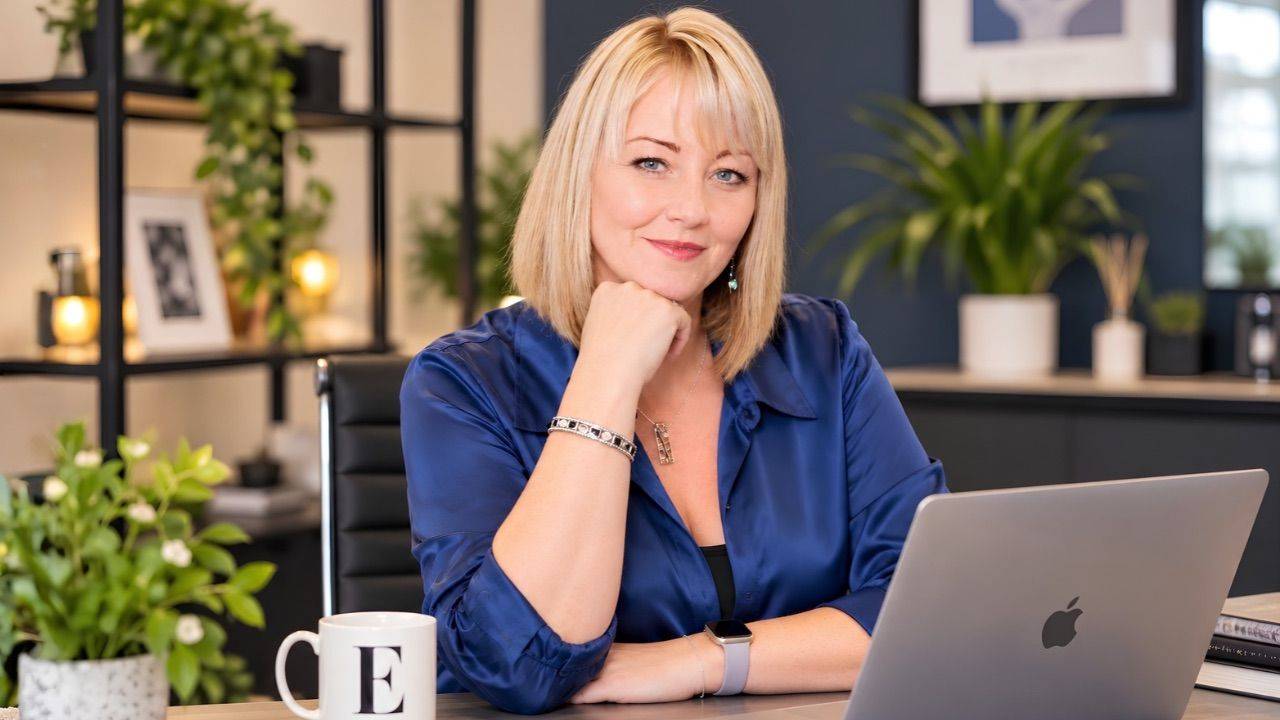
After losing control of a business she had built around her own story, Elaine Parker made ownership the heart of Exaltis. Nine years on, she’s handing small business owners the keys, and the straight answers, they deserve.
If you ask Elaine Parker what she wants people to feel when they come to Exaltis, she does not start with websites, rankings or technology. She talks about trust. “I want them to realise they can ask me the question and get an honest answer,” she says, and in an industry that seems to change by the week, crowded with acronyms, automated advice and people selling solutions before they have understood the problem, that simple promise says a great deal about how she works.
Elaine knows that many small business owners arrive at web design already feeling on the back foot. They are being told they need SEO, AEO, AI optimisation, Google Business Profiles, content, social media and new platforms and tools they may barely understand. And often, the person explaining all of this is also the person trying to sell it to them. Elaine wants Exaltis to feel different: a real woman behind a real business, someone who will explain what matters, say when something does not, and, above all else, make absolutely sure the client remains in control of what they have paid for.
Nine years in, Exaltis is established, award-winning and built largely through word of mouth, but Elaine is the first to point out that it did not arrive fully formed. The business began because the career she thought would last for life disappeared almost overnight.
Starting Again When Life Had Other Plans
Before Exaltis, Elaine spent seven years working for a software development and IT security company, moving from Office Manager to Marketing Director. She had not been waiting for the perfect moment to become an entrepreneur, and she had not spent years planning an exit. In 2017, the company closed, she was made redundant, and suddenly there was a mortgage, a young son and a very practical question about what came next.
“I didn’t think I was going to start a business,” she says. “I’d never really thought about it before.” Yet the redundancy also gave her a clear view of what she had already seen too often in the industry. Small businesses were paying over the odds for websites they did not understand, systems they could not access and services they did not necessarily need. Elaine wanted to build the opposite: something straightforward, ethical and deeply human, where a business owner could ask the question they were embarrassed to ask elsewhere and never be made to feel stupid for asking it.
Even the business name reflected that intention. Exaltis comes from exalt: to raise someone up. Elaine took the small redundancy payment she had, started the company and began building from scratch. “I’ve done the hard yards,” she says. “I understand how bloody hard it is to start and run a business.” She understands the juggling too: the work, home, children, bills and the days when, even years later, you still find yourself wondering what on earth you are doing. She says this during our conversation over a caramel latte: “Some days I still think, what am I doing?” and there is something disarming and very human about hearing that from someone whose business is fully established.
The Business That Changed Everything
Exaltis was not the only business Elaine built. Safer Date grew out of a deeply personal experience and became a mission to make online dating safer. When I first featured Elaine for The Female CEO®, the app was gaining massive traction and so was her public profile. There were television appearances, Dragons’ Den, BBC coverage, awards, media conversations and increasing recognition for the work.
“I was everywhere,” she says. “All over social media, all over the telly.” She was proud of that visibility because it was never only about being seen; it was helping her talk publicly about something she cared about to her core. “It was really starting to change things in the whole dating industry.”
Elaine still has the shelf full of the awards Safer Date won. They gather dust now, she tells me, and the way she talks about them carries a mixture of pride and distance. “What do they mean now? On one hand, they are just dust collectors, on the other, they are a reminder of everything I achieved.” Among them is recognition from the North East Regional Special Operations Unit, which brings together Cleveland, Durham and Northumbria Police, for playing a part in keeping the region safe from the threat of economic crime. She is still very proud of it, but she also admits that the whole chapter can feel as though it belongs to someone else. “It seems like a different world.”
What happened next was not simply the loss of a company. It was the loss of control over something she had built around an intensely personal mission.
When Trust Is Not Enough
Elaine had trusted the people she paid to build the technology behind Safer Date. She believed, perhaps understandably, that because the product existed to do something good, the people involved would treat it accordingly. “It was a real tech-for-good product,” she says. “It was my mission, built on my very personal, very harrowing story.”
When the relationship broke down, Elaine discovered that she did not have the control over the technology that she thought she had. The business disappeared, and the financial impact was huge. She remortgaged her home to stay afloat and says she is still recovering from the consequences years later. Yet the money was only part of what she lost.
The collapse was very public. People had watched Safer Date grow, seen Elaine on television, followed the awards and watched the momentum build. Then suddenly it was gone. “I felt like I didn’t want to show my face anywhere,” she says. Networking became difficult because people knew something had happened, but Elaine did not feel able to explain it. “I lost a lot of confidence. I lost a lot more than the business.”
There is no need to turn that period into a tidy story about resilience. It was painful, expensive and exposing in ways she did not expect. But what she learned from it is now woven through the way she runs Exaltis, because once you have lost control of something you built, ownership stops sounding like a technical detail and starts looking like protection.
Who Actually Holds The Keys?
Elaine sees versions of the same problem repeatedly in web design. A business owner pays for a website and only later discovers that it has been built on someone else’s proprietary platform. They cannot update it themselves, they do not have all of the logins, they cannot move it elsewhere and, sometimes, even a small change such as updating an address means going back to the developer, waiting for availability and paying another fee.
“It’s not okay,” Elaine says. “It’s just not.” She is not suggesting that every business owner should suddenly become a web developer or spend their evenings tinkering with code. Most people do not want to touch the back end of their website at all, and that is perfectly reasonable. The point is that they should have the choice. “If people don’t want to do anything with their website, that’s fine. But they should have the choice if they want it.”
Then there is the more basic question: what happens if the person who built your website simply disappears? “What if that web designer dies? What if something happens?” It sounds dramatic until Elaine tells you how often people arrive with websites they cannot access, edit or move. For her, it comes back to this: “Nobody should ever have more control over your business than you do.”
The £500 Website That Costs More In The End
Elaine is equally realistic about the other side of the market. Small businesses do not always have thousands of pounds to spend on a website, so she understands exactly why someone might receive a quote for £6,000 and decide to use the friend-of-a-friend who says he can build one for £500 instead. The difficulty often comes later.
“The job they get, nine times out of ten, is terrible,” she says. The friend takes the £500, and the business owner is left in the lurch with a website they can do nothing with. Elaine is not against DIY website builders either. For plenty of businesses, DIY platforms can be a perfectly sensible place to start. What matters is understanding what you are buying and what it can, and cannot, do for you.
During our conversation (and well into a second coffee), we get onto the idea of a website as a shop window. A beautiful shop window is lovely, but put it on a street no one ever walks down and it doesn’t matter how good it looks. Elaine immediately gets the point. “It’s no good having the best website ever if nobody’s going to find you.”
That is where the work behind the page matters: the structure, the language, the technical setup and the search optimisation that help both people and search engines understand what the business actually does. Elaine has watched a new wave of panic develop around AI search, with business owners being told that SEO is dead and that the latest acronym is suddenly the only thing they need to care about. She is not buying it. “People are changing the way they search, yes. But good SEO is the basis of all of that.”
Her own test needs no acronyms at all. Give your website to someone who knows nothing about your company and ask whether they can understand what you do within five seconds. If they cannot, then Google won’t either, and that’s a problem.
It is also a test Elaine now wants every small business owner to be able to run for themselves, which is why she has launched audit.exaltis.uk, a new web app that gives business owners a friendly, jargon-free health check of their website. It explains the results in plain English, and finishes with three clear next steps.
In many ways, it is Exaltis in miniature: honest, practical and built to put the business owner back in charge of what they know about their own website. Every result comes from a real check of the site, nothing is made up, and there is no tracking or advertising. Readers of The Female CEO can try it free for a month using the exclusive code at the end of this article.
Building On Rented Land
The same logic applies to businesses that exist entirely on social platforms or third-party marketplaces. Elaine is not dismissive of those channels; they can be incredibly useful and, for many businesses, they are an important part of how customers are reached. But they still belong to someone else.
“If they decide to turn things off, or decide something’s gone against their rules, they can switch your business off overnight,” she says. She has seen accounts disappear, access removed and businesses that relied heavily on one external platform suddenly discover that they no longer have a reliable route to their customers.
None of this means every small business needs an enormous website or an expensive technology stack. What matters is understanding the risk. You can rent space, build on someone else’s platform and use social media brilliantly. You just need to know which parts of the business you truly own and which parts can be taken away.
A Real Person In A Very Automated World
There is another reason Elaine wants Exaltis to feel personal. Technology is becoming increasingly automated at exactly the moment many business owners feel least confident understanding it. AI-generated content is everywhere, new tools arrive every week and businesses are constantly being told that something they learned six months ago is already obsolete.
Elaine sees an opportunity in doing something much less complicated: being a real person. “A lot of people are still really scared of technology,” she says. “They don’t know what to believe, or who to believe.”
She wants them to start asking.
That might mean asking what kind of website they need, whether they need one at all, what SEO actually means, how AI search changes things or asking someone to translate what a developer has told them into language that makes sense. Elaine takes time to understand the business before she touches the website. “I take the time to get to know each business, and the business owners, and who they are as a person, before I do any work for them,” she says. Then she treats the website as if it belongs to her own company. “That’s just the way I work.”
After nine years, most of Exaltis’s work still comes through word of mouth. In 2026, Elaine was named Web Designer of the Year at the My Local Awards North East, and she is now joining The Female CEO® as a regular contributor, answering the sort of website and SEO questions small business owners often feel they should already know the answers to. They do not have to. They can ask her.
Handing The Keys Back
There is something almost painfully appropriate about the business Elaine has built now. She knows what it is like to pour everything into something precious and discover that someone else holds the keys. She knows what it is like to trust professionals because they understand the technology better than you do, and she knows what it costs when that trust is misplaced.
So Exaltis works the other way round. The client gets the logins. The client understands what they own. The client is allowed to ask for an explanation without being made to feel difficult for doing it. Elaine cannot undo what happened to Safer Date, and she does not pretend that the experience has been neatly redeemed by what came afterwards.
The awards might still be there on the shelf, belonging to another chapter of her life, but they are also a reminder that she built that business, just as she built Exaltis from redundancy and kept going after losing something publicly that mattered enormously to her and to the people it was designed to protect.
Now, every time she hands a client the keys to something they fully own, some part of that hard-won experience is being put to better use.
“If sharing this helps even one other founder protect their business, then something good has come out of it.”
And that, as I have come to know, is very, very Elaine.
About Elaine Parker
Elaine Parker is the founder of Exaltis Solutions Ltd, a North East web design, development and SEO agency helping small businesses build websites they own, understand and can actually be found with.
Founded in 2017 following Elaine’s redundancy, Exaltis has grown largely through word of mouth and was named Web Designer of the Year at the My Local Awards North East 2026.
Before Exaltis became her sole focus, Elaine founded Safer Date, an award-winning dating app created to improve safety in online dating. Her work was recognised by the North East Regional Special Operations Unit for helping protect the region from economic crime.
Find out more at exaltis.uk and get a FREE month of the exaltis web app using the code FEMALECEO at checkout (no tie-ins, cancel at any time in app)
Tricia Scott is the Founder and Editor-in-Chief of The Female CEO — a global platform, magazine, and community dedicated to helping women build confident, aligned, powerful businesses.
A startup mentor and multi-company director, she’s spent the past decade helping women move from overwhelmed and isolated to empowered and intentional.
Most days, she’s juggling her MacBook, her next big idea, and a very necessary caffeine supply. Connect with her at thefemaleceo.com.
Want more like this?
Join The Biz Love Letter for practical business insight, founder stories and visibility opportunities every Monday — plus every new issue of The Female CEO Magazine delivered free to your inbox.
Useful stuff only. No spam, ever.